-
-
Audi Q3 Sportback – 48V MHEV -
Audi Q3 Sportback – Driver assistant systems -
Audi A6 Allroad quattro – Suspension Audi A6 allroad quattro – Hill Descent Control
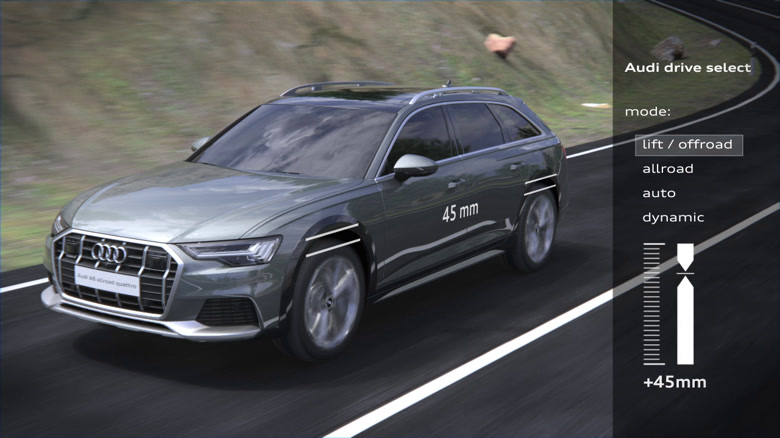
Audi A6 allroad quattro – Hill Descent Control
In addition to the specially adapted suspension, the A6 allroad quattro offers additional comfort features including standard hill descent control and tilt angle assist that allow it to take off-road terrain in its stride.
- Available media:
-

-
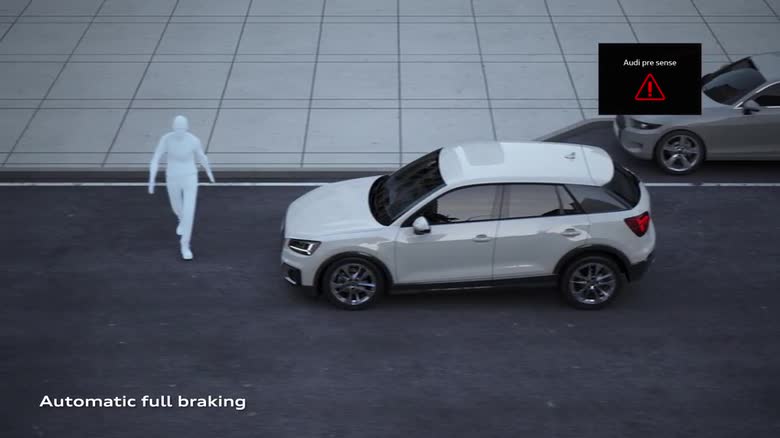
Audi Q2 pre sense front Audi Q2 pre sense front
Audi Q2 pre sense front
The Q2 sets new standards with the system Audi pre sense front, which is included as standard equipment. Its radar sensor reliably recognizes critical situations involving other vehicles and crossing pedestrians ahead of the vehicle, even when visibility is poor such as in fog. If Audi pre sense front detects a pending collision, it warns the driver according to a graduated concept.
- Available media:
-
-
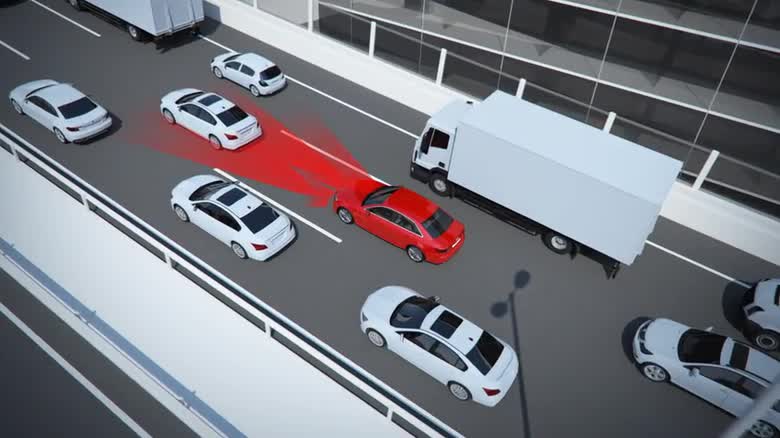
Audi A4 traffic jam assist Audi A4 traffic jam assist
Audi A4 traffic jam assist
Another function of the ACC, the traffic-jam assist, can take over steering at speeds of up to 65 km/h (40.4 mph) on well-developed roads when traffic is congested. The system uses the radar and ultrasound sensors as well as the front camera, guiding the car by gently adjusting the steering and following the traffic ahead within system limits. In doing so, the traffic-jam assist uses the lane markings and other vehicles on the road for orientation.
- Available media:
-
-
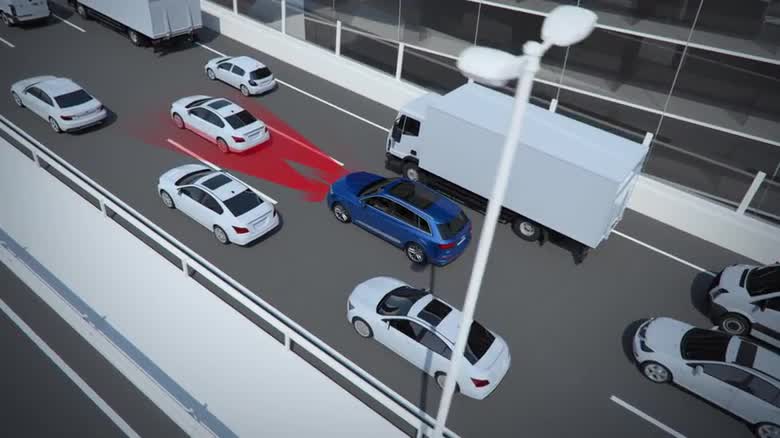
Audi Q7 traffic jam assist Audi Q7 traffic jam assist
Audi Q7 traffic jam assist
In the speed range of 0 to 65 km/h (40.4 mph) the traffic jam assist, another function belonging to the ACC, can also take over the steering on well-paved roads, as long as the traffic is moving slowly. The system uses the radar sensors and the video camera. It guides the car through gentle steering interventions and follows the preceding convoy of vehicles within the system limits. The traffic jam assist orientates itself by the lane markings and the other vehicles on the road.
- Available media:
-
-
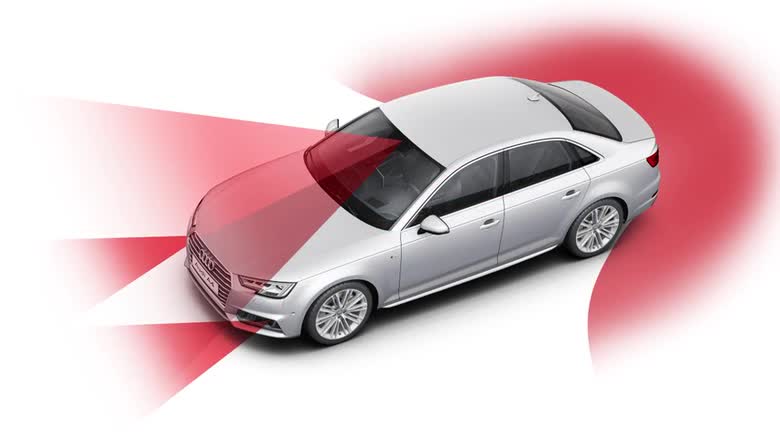
Audi A4 predictive efficiency assistant Audi A4 predictive efficiency assistant
Audi A4 predictive efficiency assistant
Another system that is unique in its class is the predictive efficiency assistant, which is available as part of the Tour assistance package. It works in close conjunction with the adaptive cruise control, the navigation system and the camera-based recognition of traffic signs. The preselected speed adapts to the road conditions by itself, e.g. the topography of the route, speed limits and the traffic ahead.
- Available media:
-
-
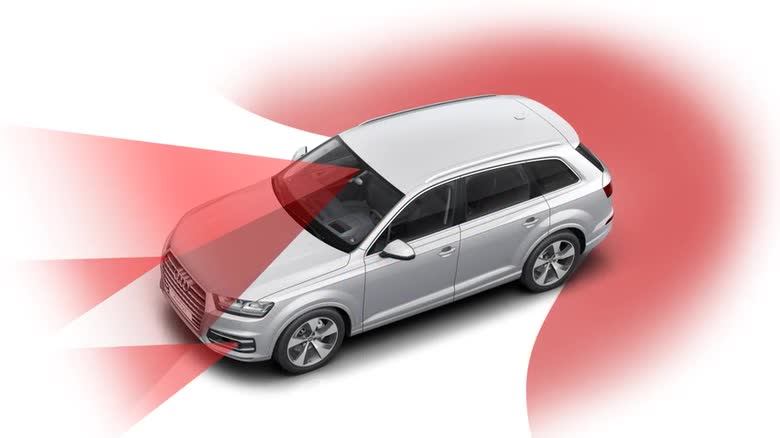
Audi Q7 predictive efficiency assistant Audi Q7 predictive efficiency assistant
Audi Q7 predictive efficiency assistant
The adaptive cruise control system works in close coordination with the MMI navigation plus, camera-based recognition of traffic signs and the predictive efficiency assistant, another pioneering system from the assistance package Tour. It automatically adjusts the preselected speed to the conditions – the route topography, speed limits and road users ahead.
- Available media:
-
-
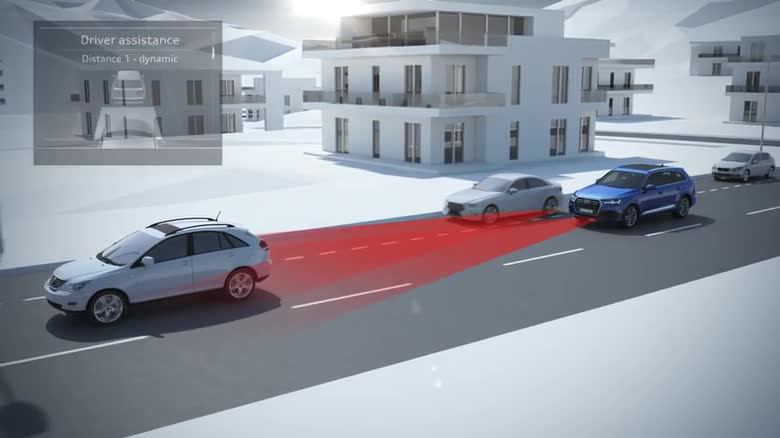
Audi Q7 predictive efficiency assistant with activated adaptive cruise control Audi Q7 Animation predictive efficiency assistant with ACC
Audi Q7 Animation predictive efficiency assistant with ACC
In collaboration with adaptive cruise control (ACC) and traffic sign recognition, the predictive efficiency assistant adapts the preselected speed to the route and the speed limits. The adaptive cruise control system accelerates and brakes to keep the Q7 at the desired distance from the vehicle ahead.
- Available media:
-
-
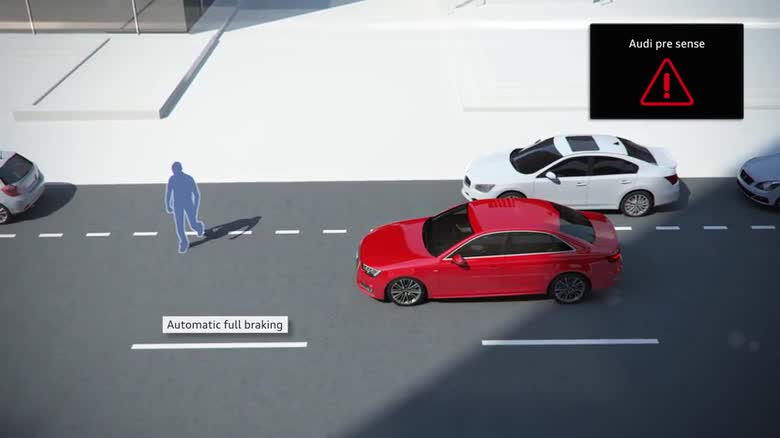
Audi A4 pre sense city Audi A4 pre sense city
Audi A4 pre sense city
All of the versions of the new models include the safety system Audi pre sense city as standard equipment. At speeds of up to 85 km/h (52.8 mph), the system scans the road for other vehicles and pedestrians using a windshield-mounted front camera with a range of up to 100 meters (328.1 ft). If there is the threat of a collision, the driver receives a series of warnings, and if necessary the car starts to apply the brakes fully. At speeds up to 40 km/h (24.9 ft), it can fully prevent accidents within the system limits. At higher speeds up to 85 km/h (52.8 mph), warnings and brake intervention can reduce the impact velocity.
- Available media:
-
-
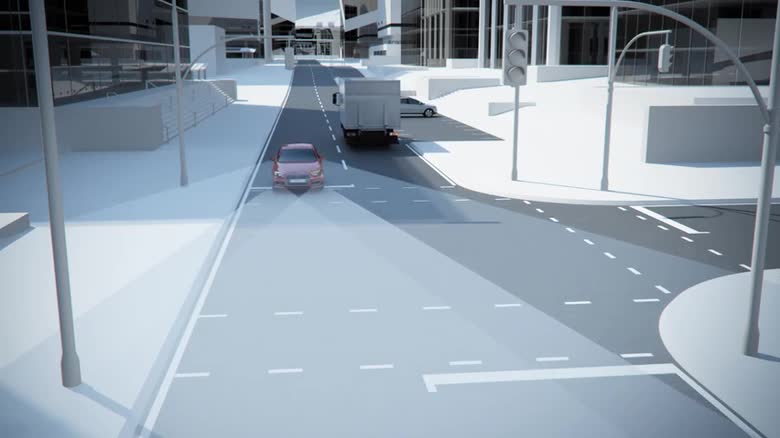
Audi A4 turn assist Audi A4 turn assist
Audi A4 turn assist
The turning assist is another Audi innovation that monitors oncoming traffic during left turns (on cars with left-hand drive). It has an operating range between 2 and 10 km/h (1.2 and 6.2 mph). In dangerous situations, it brings the car to a complete stop. The system becomes active in the background as soon as the driver turns on the left turn signal.
- Available media:
-
-
Audi Q7 turn assist Audi Q7 turn assist
Audi Q7 turn assist
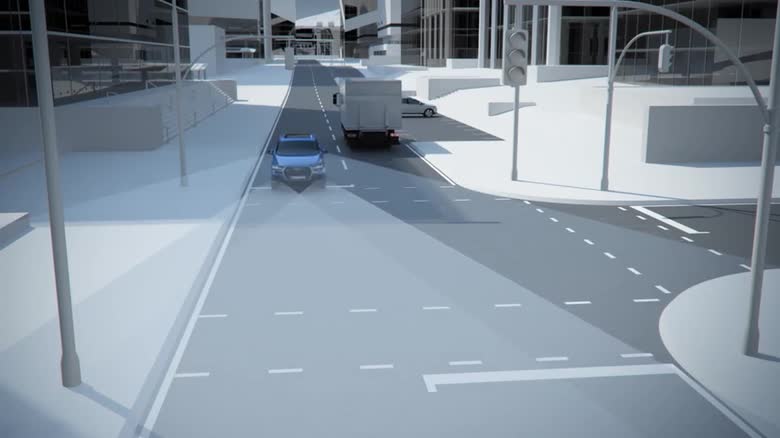
The turn assist monitors oncoming traffic when turning left at low speeds. In a dangerous situation, it slows the Q7 to a halt. This intervention keeps the Audi Q7 within its own lane. The system is enabled at speeds of between two and ten km/h (1.2 - 6.2 mph) once the driver operates the turn signal to turn left.
- Available media:
-
-
Audi A4 exit warning Audi A4 exit warning
Audi A4 exit warning
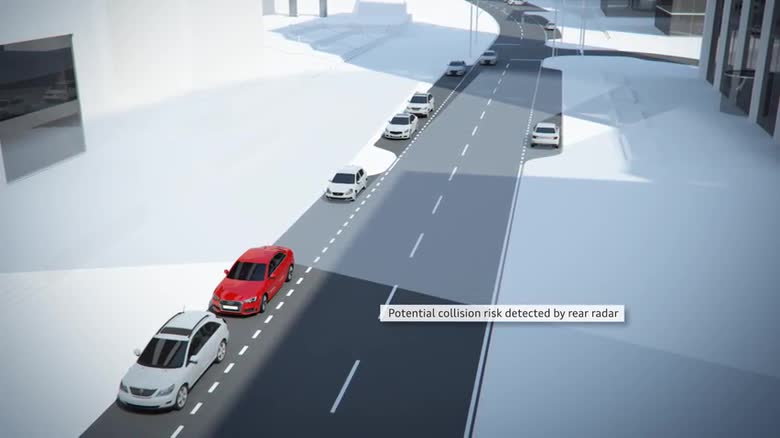
The exit warning is activated when the new Audi A4 and Avant stop moving. If other vehicles are approaching from behind, it warns occupants as they open the doors. The system warns drivers by means of LED fiber optics in the inside door-opening mechanism (contour lighting). In situations that are assessed as dangerous, special high-performance red LEDs blink and light up. The exit warning stays on for approximately three minutes after the ignition is turned off.
- Available media:
-
-
Delivery-on-demand oil pump Demand-controlled oil pump
Demand-controlled
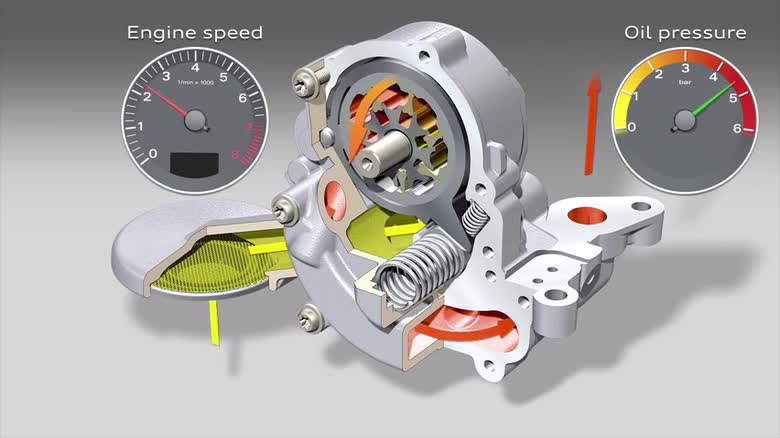
oil pumpThe engine ancillaries offer tremendous potential for efficiency. A new generation of oil pumps, which Audi employs in a number of models, are an important component. Smaller in terms of delivery rate, these volumetric-flow-controlled oil pumps operate only as required, and no longer need to circulate oil continuously.
- Available media:
-

-
Internal friction
Internal friction
Combustion engines are subject to friction losses, in which a portion of the power disappears in the mechanical interaction of the engine components. The greatest losses occur in the crankshaft – at the pistons with their sealing rings, at the connecting rod bearings and at the main bearings of the crankshaft.
- Available media:
-
-
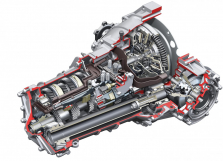
Manual transmissions
Manual transmissions
Found in much of the Audi model line-up – from the compact A1 to the R8 – manual transmissions are suited for pairing with front-wheel drive and quattro drive. While most manual transmissions operate with six gears, some use five gears.
- Available media:
-
-
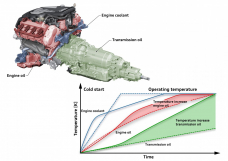
Efficiency in transmissions
Efficiency in transmissions
The manual and automatic transmissions from Audi are highly efficient. Irrespective of design, they have all been optimized with regard to internal friction and are notable for their wide gear-ratio spread.
- Available media:
-
-
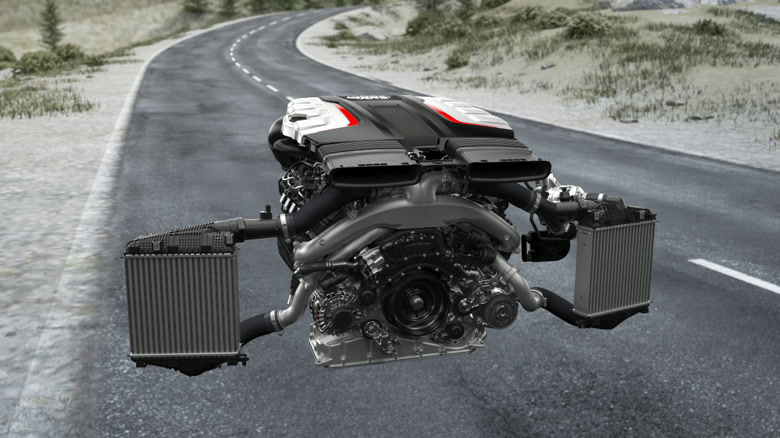
Audi SQ8 – Mild hybrid system with electric powered compressor (EPC) Audi SQ8 – Mild hybrid system with electric powered compressor (EPC)
Audi SQ8 – Mild hybrid system with electric powered compressor (EPC)
An electric powered compressor (EPC) in Audi SQ8 TDI supplements the work of the two turbochargers when starting off and when accelerating at a low engine speed, allowing the V8 TDI to always build up its power spontaneously.
- Available media:
-
-
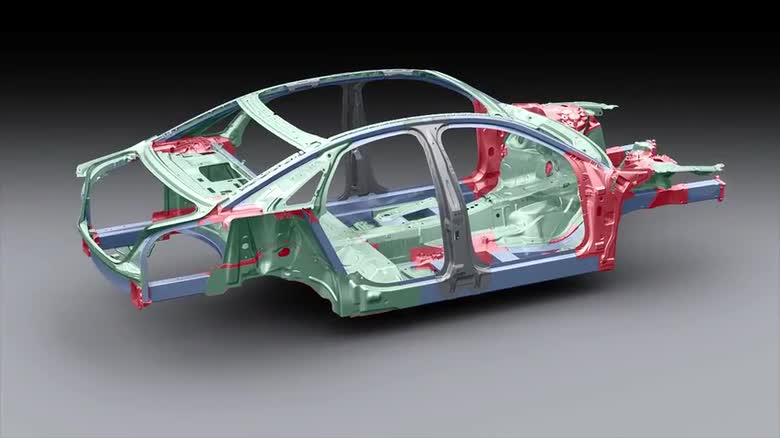
Semi-finished components Semi-finished components
Semi-finished components
The ASF body comprises three semi-finished components: extruded sections, diecast components and aluminum panels. Audi engineers employ each of these components following the principle: “The right material in the right place for optimal function.”
- Available media:
-
-
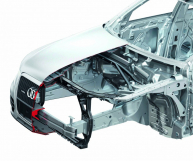
Pedestrian Protection
Pedestrian Protection
Cars from Audi also meet all the requirements in the event of an accident involving a pedestrian. In the A8, for example, a foam component between the front bumper and its cross-member lessens the impact on the knees.
- Available media:
-
-
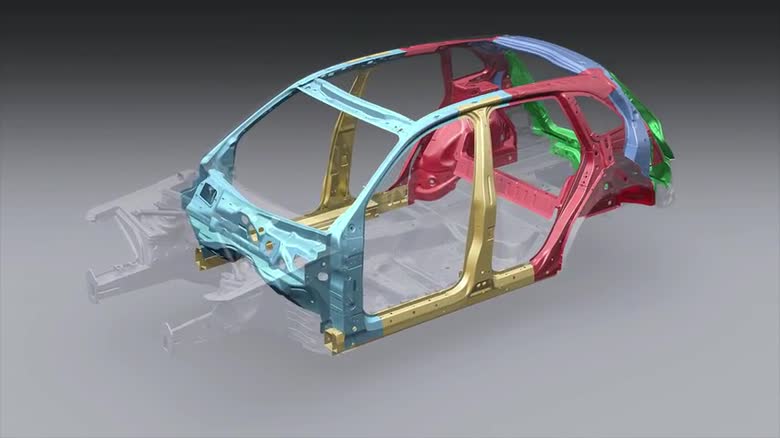
Torsional stiffness in the Audi Q5 Torsional stiffness
Torsional stiffness
Static torsional stiffness, the resistance to torsion in the longitudinal direction, is a critical factor in determining a body’s strength and a primary consideration for each new design from Audi. In the A8, for example, torsional stiffness increased by approximately 25 percent compared with the previous model. In the TT Coupé the increase was 50 percent, and in the TT Roadster an outstanding 100 percent.
- Available media:
-
-
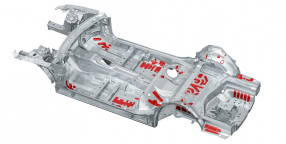
Vibration behavior
Vibration behavior
Undesired resonant vibrations in the body are strictly taboo. At Audi a great deal of work goes into preventing or minimizing such vibrations. In the A8, for example, the development engineers specifically analyzed and minimized all vibration levels at the contact points between the passengers and the body – the floor panel, the seats, the steering wheel, and the inside mirror.
- Available media:
-
-
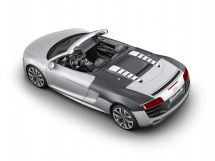
CFRP materials
CFRP materials
Carbon-fiber-reinforced polymers (CFRP) are particularly attractive materials for the “ultra” lightweight design from Audi. The brand already offers a number of large and small CFRP components, primarily in the R8 model family. These range all the way to partially self-supporting structural components such as the side walls and the cover for the top component in the R8 Spyder.
- Available media:
-
-
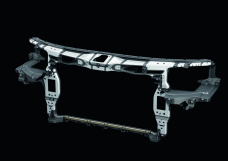
Other materials
Other materials
Fiber-reinforced polymers (FRP) offer many advantageous possibilities for the “ultra” lightweight design of the future. Development engineers at Audi are by no means fixated on CFRP alone. They are instead exploring all avenues.
- Available media:
-
-
Audi e-tron quattro concept Audi e-tron quattro concept
Audi e-tron quattro concept
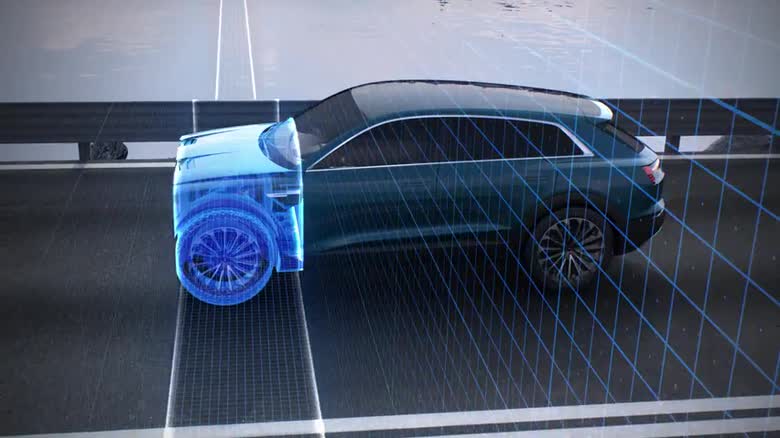
Aerodynamically-optimized design with a drag coefficient of 0.25, a purely electric e-tron quattro drivetrain with up to 370 kW of power output – the Audi e‑tron quattro concept is an all-electric, full-size class sport SUV. The technology study provides a firm glimpse at the production model to follow in 2018. And it is a statement about the future of electric mobility: It is sporty, efficient and suitable for everyday use.
- Available media:
-
-
Audi R18 2016 en The new Audi R18
The new Audi R18 2016
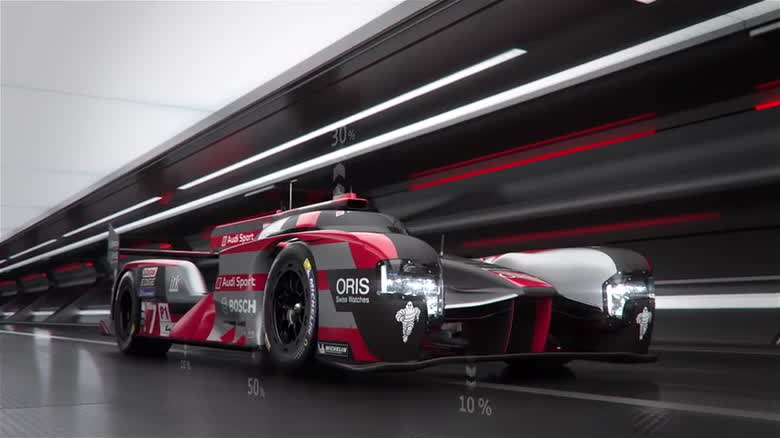
For the FIA World Endurance Championship (WEC) and the Le Mans 24 Hours, Audi is emphasizing focal areas in the 2016 season: The Audi R18 that has been redesigned from scratch has almost nothing in common anymore with its predecessor. It features a more radical aerodynamics concept, including a new safety cell, its hybrid drive system is battery-operated for the first time, the V6 TDI engine has been revised, and new system solutions have been added. As a result, Audi’s LMP1 sports car is a vehicle that is more powerful and – once more – clearly more efficient than its predecessor. While the new R18 is Audi’s strongest race car to date, it consumes less fuel than any of the generations before it.
- Available media:
-
-
Audi A7 Sportback h-tron quattro Audi A7 Sportback h-tron quattro
Audi A7 Sportback h-tron quattro
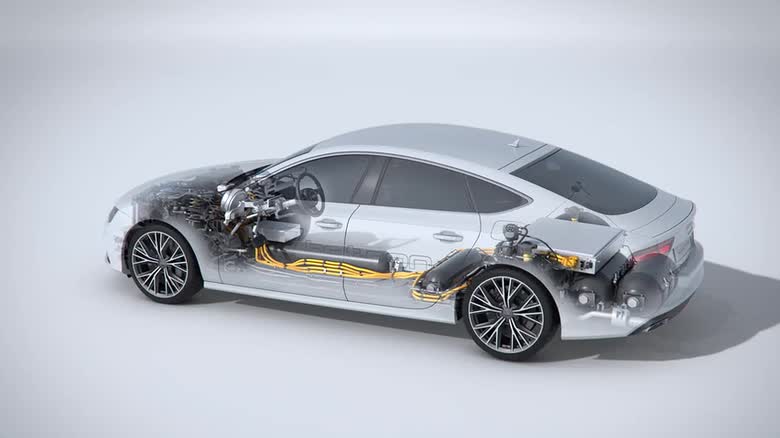
It sprints from 0 to 100 km/h (62.1 mph) in 7.9 seconds and reaches a top speed of 200 km/h (124.3 mph). It can cover more than 500 kilometers (310.7 mi) on a single tank, with nothing more than a few drops of water leaving the tailpipe. The A7 Sportback h‑tron quattro* uses a 170 kW electric drive system with a fuel cell as the energy source. Each of the two electric motors drive the wheels of one axle. The Audi technical concept car is a true quattro and thus unique among fuel cell automobiles.
- Available media:
-
-
Audi R18 e-tron quattro 2014 Audi R18 e-tron quattro 2014
Audi R18 e-tron quattro 2014
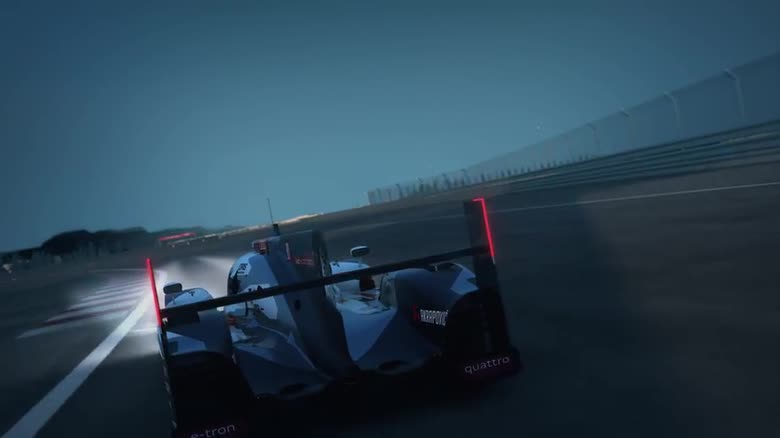
The Audi R18 e-tron quattro is the most complex race car created in Ingolstadt and Neckarsulm to date. This not only applies to the mechanics. The electronics of the most recent LMP1 race car with the four rings is more sophisticated than ever before.
The age of electronic data transmission from the race car on track began for Audi in 1989. At that time, an Audi 90 quattro in the IMSA GTO series radioed eight parameters to the garage where engine speeds and a few pressures and temperatures were plotted on printouts – a tiny step from today’s perspective, but one that provided important insights at the time.- Available media:
-
-
Audi duo
Audi duo
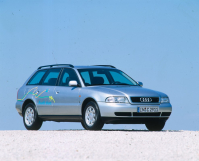
Audi can look back on over 20 years of experience in hybrid technology. The first generation of the Audi duo had its debut as early as 1989 – a concept car based on an Audi 100 Avant. A five-cylinder gasoline engine drove the front wheels, and a part-time electric motor developing 9 kW (12 hp) drove the rear wheels. Nickel-cadmium batteries served as energy stores. Another duo variant based on an Audi 100 Avant quattro followed two years later.
- Available media:
-
-
Audi Q7 exit warning Audi Q7 exit warning
Audi Q7 exit warning
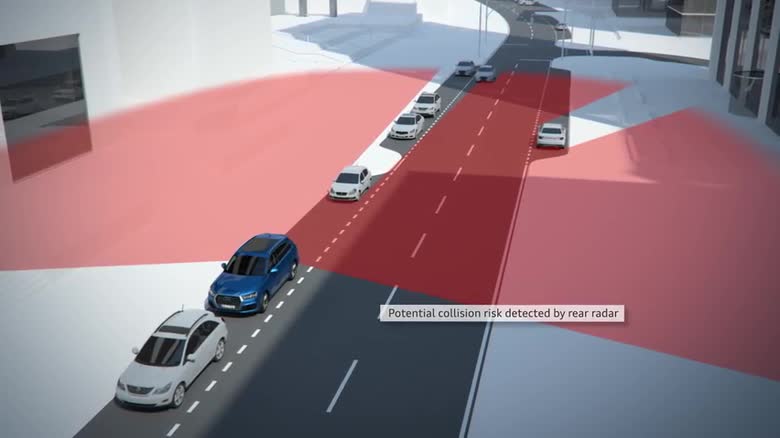
The exit warning comes into play once the large SUV has stopped. Should vehicles or bicycles now approach from behind, the system warns the driver and all passengers when they start opening a door. The system uses the LED light guides of the light package in the doors – in a situation identified as hazardous, special high-power LEDs flicker and light up red. The exit warning remains in readiness for about three minutes after the ignition is switched off.
- Available media:
-
-
Audi Q2 rear cross traffic assist Audi Q2 rear cross traffic assist
Audi Q2 rear cross traffic assist
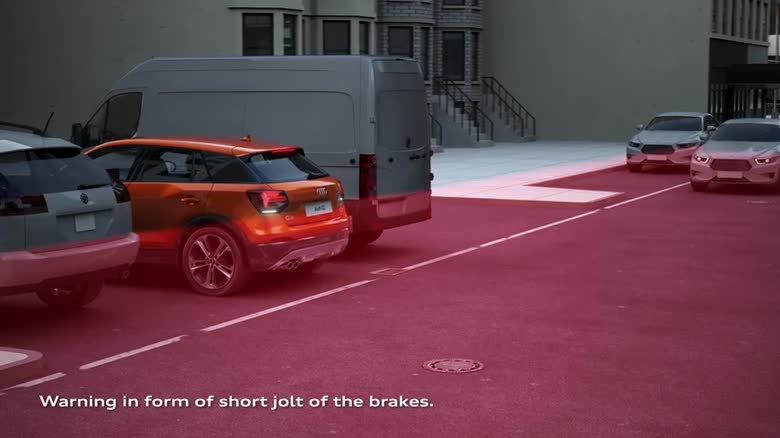
An ideal supplement to the park assist is the cross traffic assist rear. When slowly reversing, such as when exiting a perpendicular parking spot or a narrow driveway, it warns the driver of approaching vehicles it considers to be critical. Notification is staged – visual, acoustic and finally with a jolt of the brakes. The system uses the data from the rear radar sensors.
- Available media:
-
-
Audi A4 rear cross traffic assist Audi A4 rear cross traffic assist
Audi A4 rear cross traffic assist
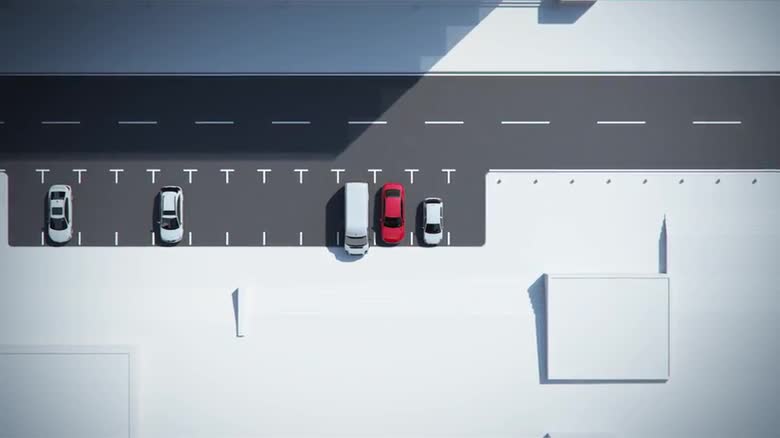
The rear cross-traffic assist is activated when the parking assist is turned on. When this occurs, drivers who are slowly driving backwards (for example, while leaving a parking spot at right angles to the road) are warned about approaching vehicles in critical range. There are different levels of warnings: visual, acoustic and a short jolt of the brakes. The back radar sensors provide the necessary data.
- Available media:
-
-
Audi Q7 rear cross traffic assist Audi Q7 rear cross traffic assist
Audi Q7 rear cross traffic assist
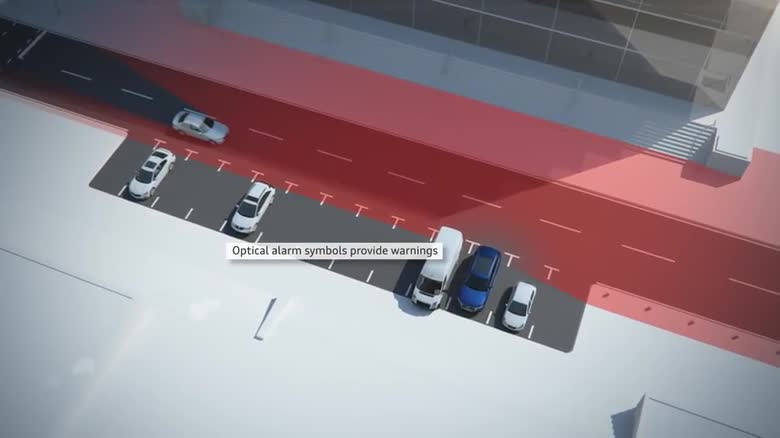
The cross-traffic assist rear uses the rear radar sensors to warn the driver, if the parking system is enabled, while reversing slowly, as when pulling out of a perpendicular parking spot in front of other vehicles detected as critical threats. The warning occurs in graduated form – visually on the MMI monitor, acoustically and, if necessary, with a jolt.
- Available media:
-
-
Audi Q2 park assist Audi Q2 park assist
Audi Q2 park assist
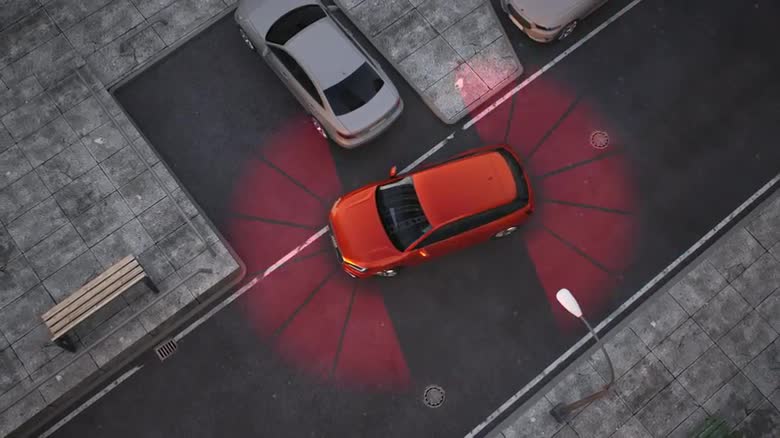
The park assist is the top-of-the-line solution and can steer the Audi Q2 into parking spaces. While driving at slow speeds, two ultrasonic sensors detect suitable parallel or perpendicular parking spots. The driver just has to engage the proper gear, use the accelerator and the brakes. The park assist backs the compact SUV into the spot.
- Available media:
-
-
Audi Q7 park assist Audi Q7 park assist
Audi Q7 park assist
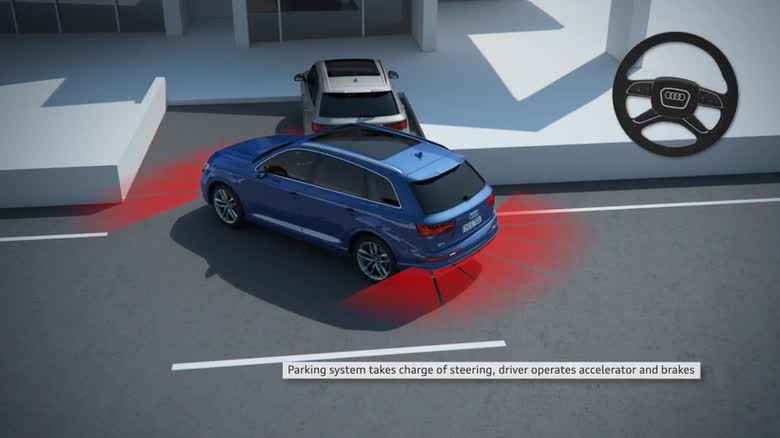
The park assist system, which practically automatically steers the new Q7 in parallel and perpendicular parking and pulls out of parallel parking spots by means of twelve ultrasonic sensors. The package also includes the 360 degree cameras. They display different views of the car’s immediate surroundings on the MMI monitor, including a virtual bird’s eye view and 180-degree images of the front and rear. Such views are very helpful with confusingly arranged exits, and in combination with the cross-traffic assist rear.
- Available media:
-
-
Audi Q2 side assist Audi Q2 side assist
Audi Q2 side assist
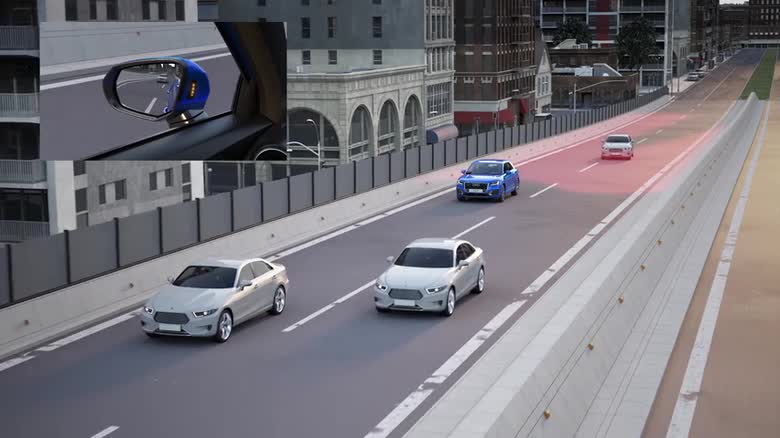
The lane change assistant Audi side assist is active at speeds of 15 km/h (9.3 mph) and above. It uses two rear-mounted radar sensors with a scanning range of roughly 70 meters (229.7 ft). If a vehicle is located in the blind spot or approaches rapidly, a warning LED in the housing of the respective exterior mirror lights up. If the driver still operates the turn signal, the LED flashes brightly several times in succession.
- Available media:
-
-
Audi Q2 emergency assist Audi Q2 emergency assist
Audi Q2 emergency assist
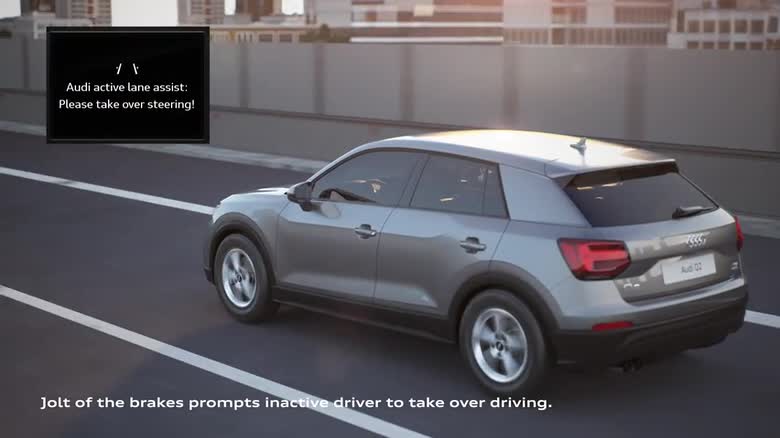
The emergency assist activates if no reaction on the part of the driver is detected despite warnings from Audi active lane assist. After visual and acoustic warnings plus multiple brake jolts with flashing of the hazard warning lights, the final measure is for the system to autonomously bring the Q2 to a complete stop and activate the parking brake.
- Available media:
-
-
Audi A4 allroad quattro trailer assistant Audi A4 allroad quattro trailer assistant
Audi A4 allroad quattro trailer assistant
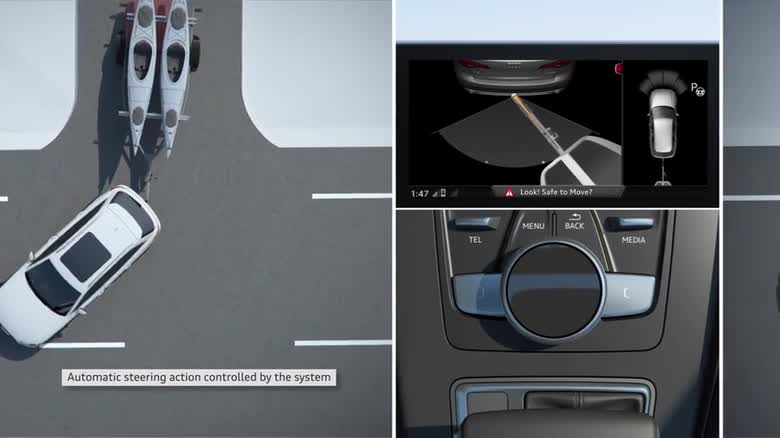
If the new A4 allroad quattro is used as a tow vehicle, the optional trailer maneuver assist steers the car-trailer combination backwards in the direction the driver indicates with the rotary/push-button control of the MMI. It also manages turning the steering wheel in the opposite direction and stabilizes the trailer when driving straight ahead.
- Available media:
-
-
adaptive cruise control adaptive cruise control with stop & go function
adaptive cruise control with stop & go function
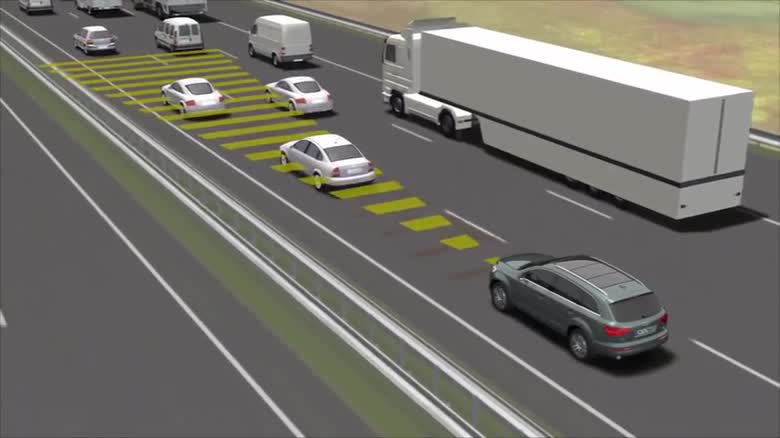
The central element of the Audi driver assistance systems is the adaptive cruise control with stop & go function, an automatic distance control system. The system, which is available in a number of larger models, regulates the speed and the interval to the vehicle ahead by automatically accelerating and braking in a speed range of 0 to 250 km/h (0 – 155.34 mph).
- Available media:
-
-
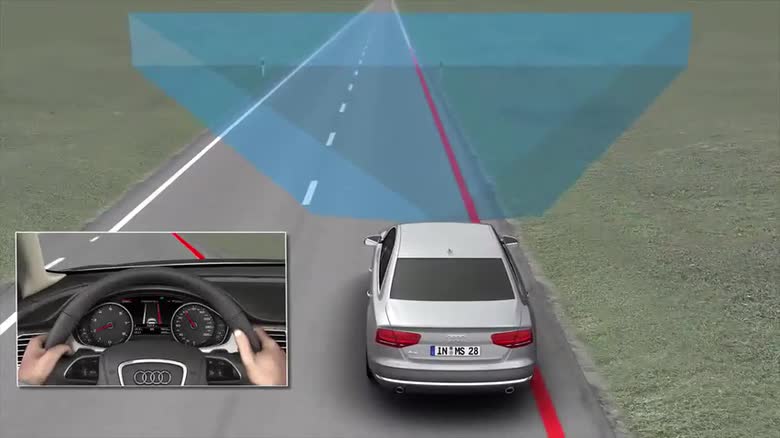
Audi lane assist Audi active lane assist
Audi active lane assist
One of the latest assistance systems from Audi is Audi active lane assist. At speeds above 60 km/h (37.28 mph), it uses a camera mounted in front of the rearview mirror to detect the lane markings. It observes the road to a distance of more than 50 meters (164.04 ft) and a coverage angle of roughly 40 degrees. It delivers 25 high-definition images per second.
- Available media:
-
-
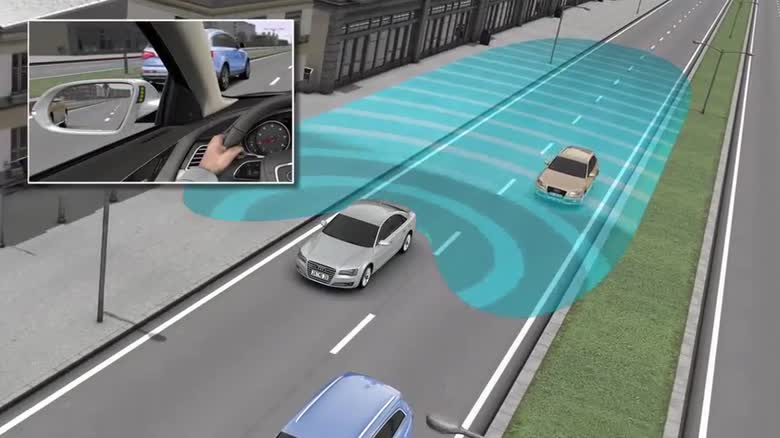
Audi side assist Audi side assist
Audi side assist
The lane change assistant Audi side assist is available in an entire range of Audi models. It monitors the traffic behind the vehicle and warns the driver as necessary prior to critical lane changes. The EuroNCAP safety organization recognized the potential of Audi side assist for preventing accidents and awarded it a prize in fall 2010.
- Available media:
-
-
Night vision assistant
Night vision assistant
The night vision assistant is an assistance system for the larger model series from Audi. The heart of this system is a thermal imaging camera at the front of the vehicle. It has an angle of view of 24 degrees, and its protective window is cleaned by a separate nozzle and heated when cold. As a far infrared system (FIR), the camera reacts to the heat radiated by objects in the recorded scene. A computer transforms the information from the camera into black-and-white images and displays them on the central display located between the instruments.
- Available media:
-
-
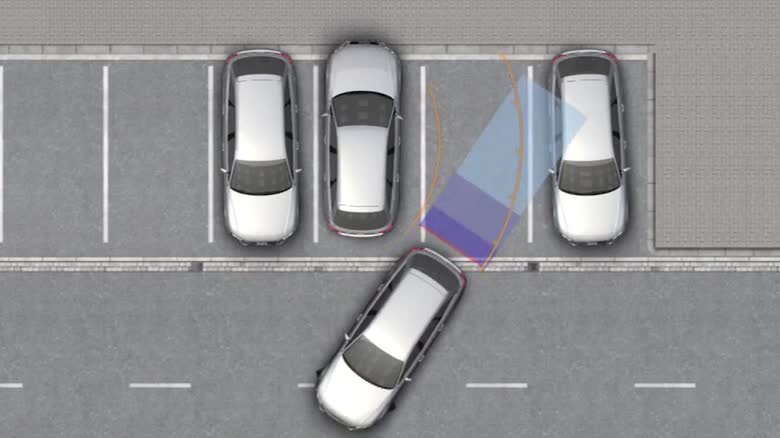
parking system Park assist
Park assist
Audi offers a variety of different parking systems for its complete model line-up. They use ultrasound, acoustic and optical signals, or a rearview camera whose images are displayed on the on-board monitor. The most convenient solution is the park assist.
- Available media:
-
-
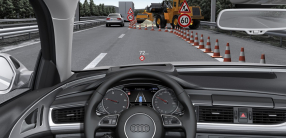
Speed limit display
Speed limit display
Like all assistance systems from Audi, the purpose of the speed limit display is to reduce the burden on the driver. It shows the driver the current maximum permissible speed in the instrument cluster or on the optional head-up display.
- Available media:
-
-
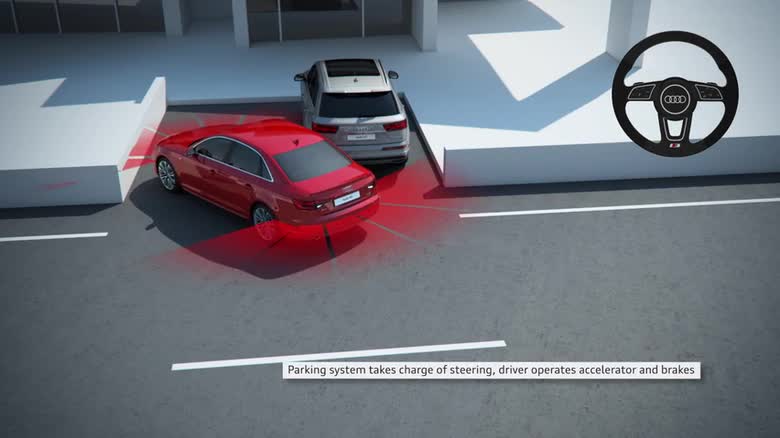
Audi A4 park assist Audi A4 park assistant
Audi A4 park assistant
The Parking assistance system features the park assist (also available separately). With the help of twelve radar sensors, it helps maneuver the car into parking spaces that are parallel or at right angles to the road, which it identifies independently when driving at a moderate speed. Furthermore, it can make its own way out of parking spaces parallel to the road. All the driver has to do is accelerate, shift gears and brake.
- Available media:
-
-
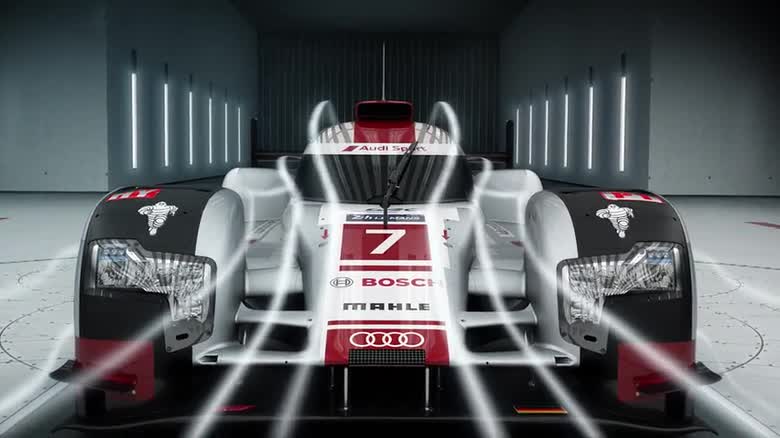
Audi R18 e-tron quattro Audi R18 e-tron quattro
Audi R18 e-tron quattro
Audi is starting the 2015 season with a thoroughly revised R18 e-tron quattro. In the FIA World Endurance Championship (WEC) and in the Le Mans 24 Hours as the season’s pinnacle event, Audi is going to compete with a hybrid sports car in the 4-megajoule class.
- Available media:
-
-
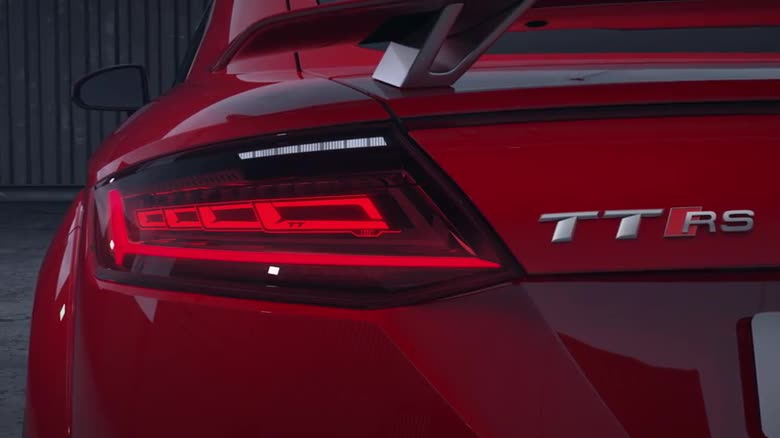
Audi TT RS Coupé and Roadster – Matrix OLED technology Audi TT RS Coupé and Roadster – Matrix OLED technology
Audi TT RS Coupé and Roadster – Matrix OLED technology
For the first time in a series-production Audi, Matrix OLED technology (organic light emitting diode) is used in the rear lights as an option. These emit an extremely homogeneous, precise light. The light does not cast any harsh shadows and does not require any reflectors – this makes the OLEDs in 3D design efficient, lightweight and visually impressive. Each rear light contains four wafer-thin units that become smaller from the inside out. The biggest bears the TT logo and the four Audi rings.
- Available media:
-
-
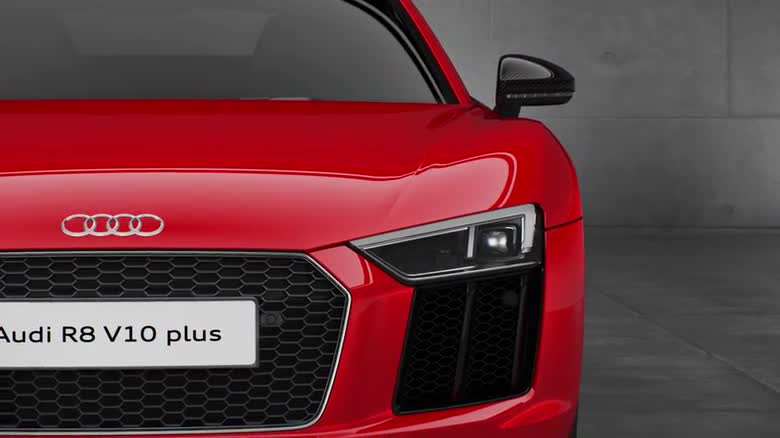
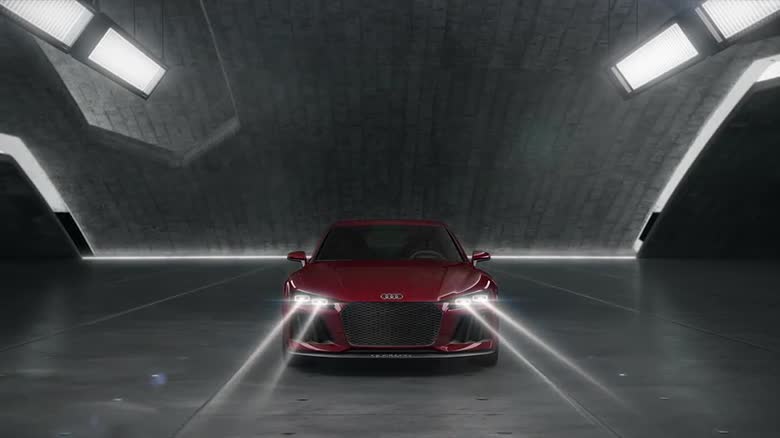
Audi R8 V10 plus – LED-headlights with Audi laser light Audi R8 V10 plus – LED headlights with Audi laser light
Audi R8 V10 plus – LED headlights with Audi laser light
The laser spot doubles the range of the high-beam light. In each headlight there is a module with four powerful laser diodes that are just 300 micrometers in diameter. They generate a blue laser beam with a wavelength of 450 nanometers. A phosphorus converter converts it into white light with a color temperature of 5,500 Kelvin that is pleasing to the human eye. The laser spot – which is active outside of urban areas at speeds of 60 km/h (37.3 mph) and above – offers tremendous advantages in terms of visibility and safety to drivers. An intelligent camera-based sensor system detects other road users and actively adjusts the light pattern to dim the light intensity specifically for them.
- Available media:
-
-
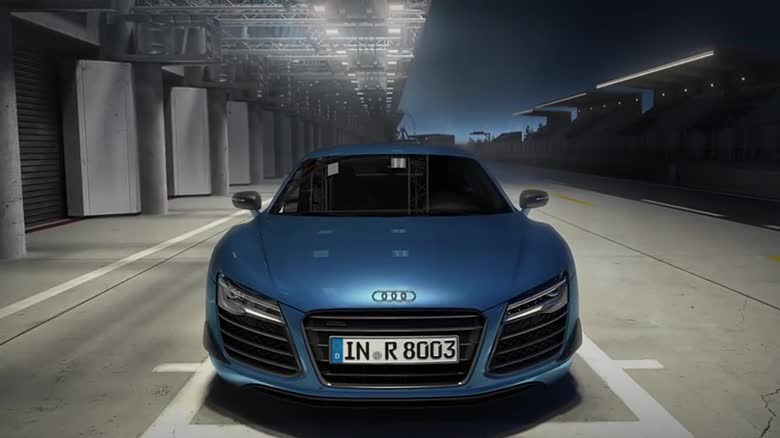
Audi R8 LMX Laserlight in Audi R8 LMX
Laserlight in Audi R8 LMX
419 kW (570 hp), from 0 to 100 km/h (62.1 mph) in 3.4 seconds: The Audi R8 LMX (12.9 liters of fuel per 100 kilometers [18.2 US mpg]; 299 grams CO2 per kilometer [481.2 g/mile]) offers breathtaking performance and groundbreaking technology.** The limited-edition car is the first production car in the world to come equipped with laser high beams.
- Available media:
-
-
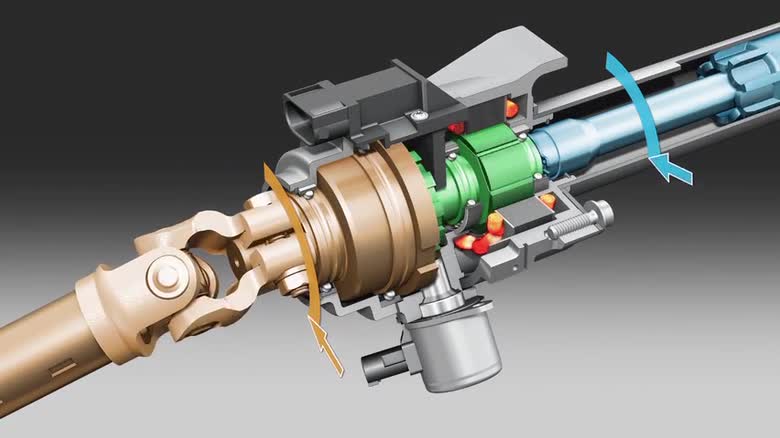
Dynamic steering Dynamic steering
Dynamic steering
Audi will include its high-tech dynamic steering on request in some model lines. Dynamic steering varies the steering ratio by nearly 100 percent as a function of driving speed and the setting in the Audi drive select system in which it is integrated. Transitions are continuous and practically imperceptible.
- Available media:
-
-
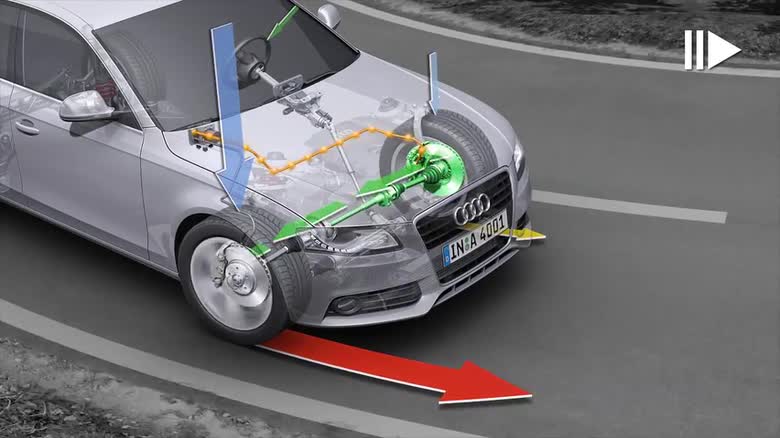
ESC (ESP) with electronic limited slip differential ESC with electronic limited slip differential
ESC with electronic limited slip differential
Many Audi front-wheel-drive models come equipped with sporty suspension technology as standard. The ESC stabilization program with electronic limited slip differential is an intelligent software solution.
- Available media:
-
-
Wheel brakes
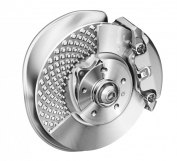
Wheel brakes
The brake assembly matrix from Audi provides the appropriate components for each model. Powerful performance, extreme robustness, low weight and state-of-the-art technology are the features common to all of them.
- Available media:
-
-
Wheels
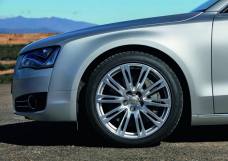
Wheels
Alloy wheels from Audi are elegant, high-quality and lightweight. After all, Audi has made lightweight design a top priority in wheel development, too. Various methods are available to achieve this. Many designs today are being produced using flow-forming technology. This is a process in which the rim well of a cast wheel is rolled out over a cylinder at high pressure and a temperature of over 300 degrees Celsius (572 degrees Fahrenheit). The system shapes the wheel blank in a single step, in a manner similar to a potter’s wheel. In so doing, it compresses the material, allowing a thinner wall thickness. The wheel becomes lighter and at the same time sturdier. Flow-forming wheels are several hundred grams lighter than conventional wheels, depending on their dimensions.
- Available media:
-
-
Tire pressure monitoring system Tire pressure monitoring system
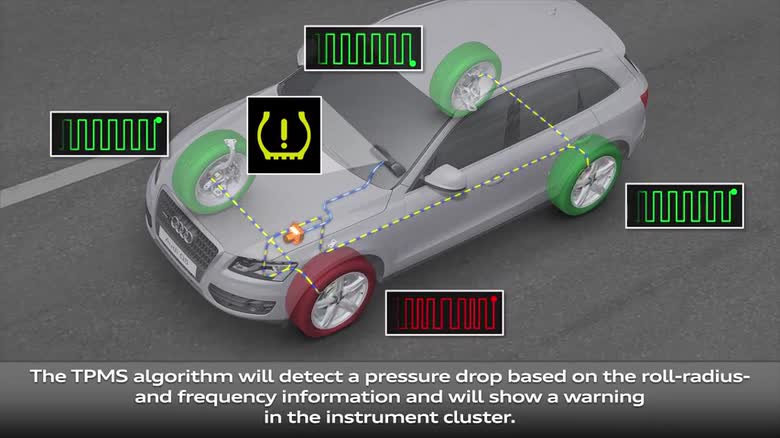
Tire pressure monitoring system
Many models from Audi are equipped with a tire pressure monitoring system that is integrated into the electronic stabilization program (ESP). This is a system that measures indirectly, has no sensors of its own in the tire and thus adds no weight and requires no maintenance. It alerts the driver in the event of pressure loss by displaying a warning on the onboard monitor. If only one tire is affected, the position of the tire is indicated. The system also detects a gradual loss of pressure through diffusion in all four tires, resulting in a higher rolling resistance and increased fuel consumption.
- Available media:
-
-
Light systems of the future Matrix Laser technology
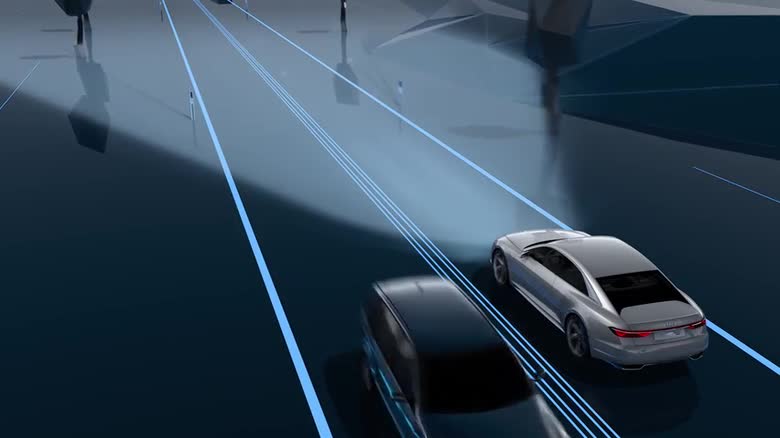
Matrix Laser technology
Audi is further extending its lead in automotive lighting technology. In the sponsored project “intelligent laser light for compact and high-resolution adaptive headlights” (iLaS), the brand with the four rings is working on the headlights of the future with partners from industry and science. Matrix Laser technology and its high resolution will make roadway illumination even more flexible and highly versatile – in all situations.
Matrix Laser technology is based on the LaserSpot for high‑beam lamps, which Audi first introduced to production in the Audi R8 LMX. For the first time, bright lasers are making it possible to integrate projector technology in a compact and powerful headlight.- Available media:
-
-
adaptive light
adaptive light
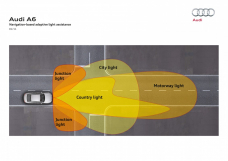
The adaptive light is an Audi technology for the xenon plus headlights and is available in a number of different versions. In the top models its controller manages the swiveling modules so that they always deliver the perfect light for urban, interurban and highway driving. The driver can precisely control the function of the adaptive light via the Audi drive select driving dynamics system. The all-weather light integrated into the headlight replaces the fog light.
- Available media:
-
-
LED tail lights LED rear lights
LED rear lights
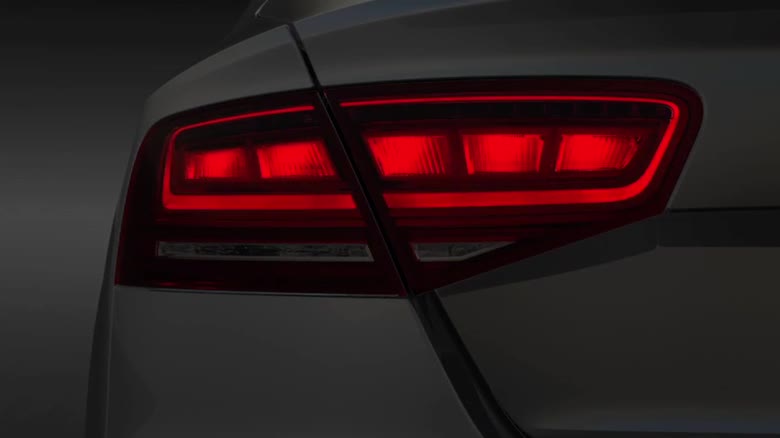
Rear lights using LED technology are available either as standard or as an option in all Audi models. They produce a distinctive light pattern that in many cases also produces attractive three-dimensional effects. The LEDs are extremely long-lasting and practically maintenance-free. The most important thing, however, is how extremely quickly they reach their full luminosity: if the driver has to brake suddenly, the driver behind gains valuable fractions of a second.
- Available media:
-
-
Audi Q - Fahrwerk_EN -
Audi Q5 – adaptive air suspensiopn with damper control Audi Q5 – adaptive air suspensiopn with damper control
Audi Q5 – adaptive air suspensiopn with damper control
An especially attractive solution is the suspension with damper control, which is available for all engine versions with a quattro drive. Its design is based on the CDC principle (CDC: continuous damping control): Electromagnetically actuated valves in the damper piston alter the through-flow cross-sectional area for the hydraulic fluid as necessary.
- Available media:
-
-
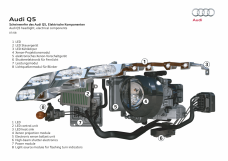
Xenon plus headlights
Xenon plus headlights
Xenon headlights are gas discharge lamps. Two tungsten electrodes are sealed in the burner, a thick-walled quartz glass cylinder filled with xenon gas. A concentrated electric arc burns between the electrodes, and the inert gas filling exerts a pressure of as much as 100 bar (1,450.38 psi). The xenon gas itself gives off a somewhat violet light. Metallic salts in the filling of the gas cylinder reduce its color temperature to 4,200 Kelvin.
- Available media:
-
-
Laserlight -
Audi A5 Coupé – Suspension with damper control Audi A5 Coupé – Suspension with damper control
Audi A5 Coupé – Suspension with damper control
The all-new chassis is among the strengths of the Audi A5 Coupé*, including with respect to systematic lightweight construction and precise response. From dynamic handling to comfortable cruising – the two-door coupé has luxury-class qualities.
- Available media:
-
-
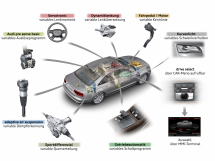
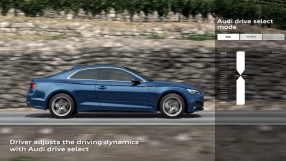
Audi drive select
Audi drive select
The Audi drive select dynamic handling system lends fascinating breadth to the driving experience. Audi offers it in most of its models – as an option in some, a standard feature in others, and with the possibility of modular expansion in all of them.
- Available media:
-
-
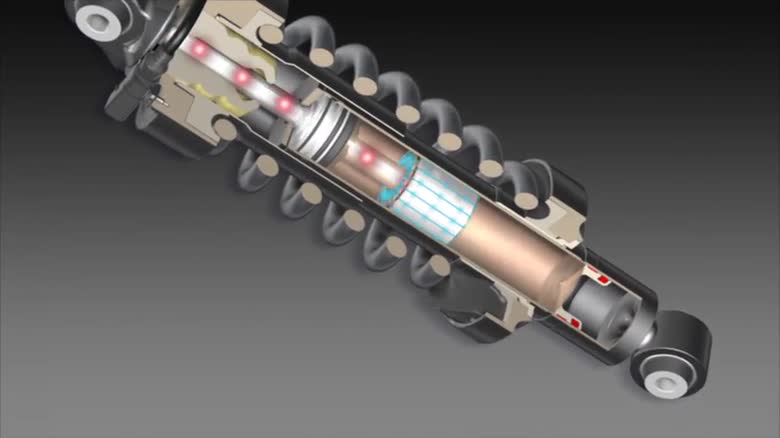
adaptive magnetic ride Audi magnetic ride
Audi magnetic ride
Audi magnetic ride is a suspension technology employed in the A3, TT and R8 families. This system continually adapts the function of the shock absorbers to the road profile and the driver’s style.
- Available media:
-
-
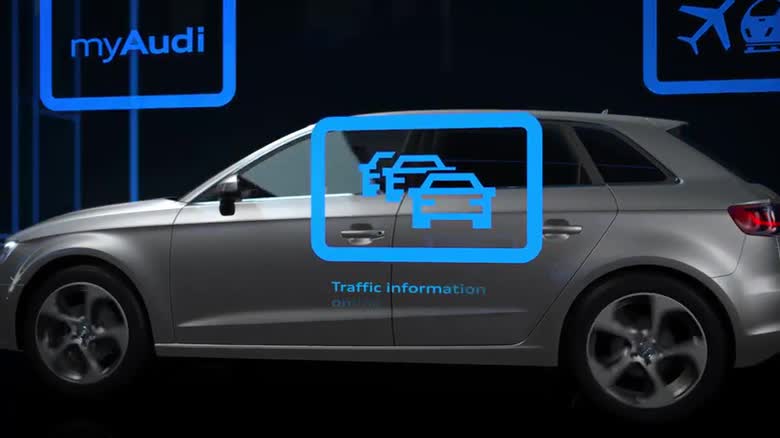
Aud connect Audi connect
Audi connect
Audi vehicles are master communicators. Some of them can network with the Internet. The catchword here is Audi connect. This requires the Bluetooth car phone online, an extension of the top-of-the-line navigation system MMI navigation plus, that brings a UMTS module and a Wi-Fi hotspot to the car.
- Available media:
-
-
Predictive route data
Predictive route data
The top navigation system, the MMI navigation plus, is networked in a pioneering manner with the driver assistance and safety systems on board the large Audi models. Its navigation database describes the entire European road system in countless details.
- Available media:
-
-
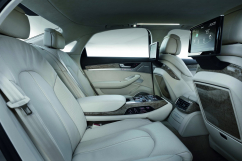
Rear seat entertainment
Rear seat entertainment
As the name suggests, Rear Seat Entertainment is a multimedia system for the rear seat. The latest version of this system is used in the A8. The backrests of the driver and front-passenger seats each integrate a high-resolution display measuring 10.2 inches diagonally. They can be tilted 10 degrees and are capable of displaying different content. A sensor enables their brightness to adjust automatically to the lighting conditions inside the vehicle. They are controlled via a separate MMI controller in the rear center armrest.
- Available media:
-
-
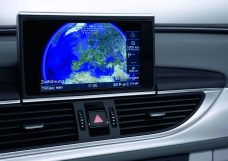
New electronics platform
New electronics platform
“German engineering meets Silicon Valley” – a fitting slogan to describe the partnership that Audi has been nurturing with the Nvidia Corporation since 2005. This partnership quickly moved the brand with the four rings into a leading position in automotive infotainment. Nvidia technology enabled such innovations as the world’s first integration of Google Earth navigation and the elegant graphics featured in many models.
- Available media:
-
-
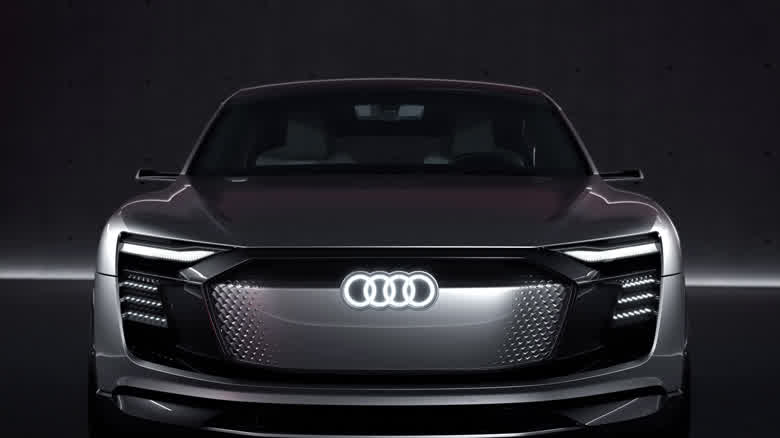
Audi e-tron Sportback concept Audi e-tron Sportback concept
Audi e-tron Sportback concept
Design study and technology demonstrator, electric car and power pack in the guise of a coupé: A versatile concept car makes its world debut in the Chinese metropolis of Shanghai as the Audi e-tron Sportback concept. The brand with the four rings presents the study of a four-door Gran Turismo with a powerful 320 kW electric drive at the Auto Shanghai 2017 this spring. The formal idiom of the coupé with Lux Silver paint finish combines classic Audi elements with an array of trendsetting details: an electrifying architecture, tailored consistently to the technology and the package of the electric drive.
- Available media:
-
-
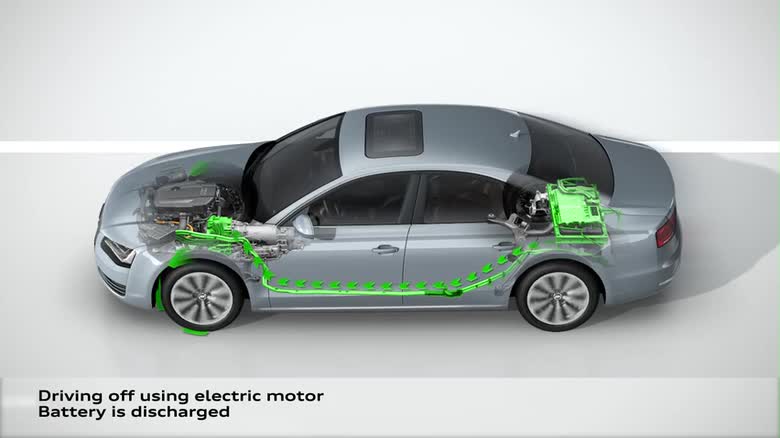
Audi A8 hybrid Audi A8 hybrid
Audi A8 hybrid
The Audi A8 hybrid is designed as a parallel hybrid. Its combustion engine and the electric motor are located one directly behind the other and are linked by a clutch to work together, when necessary. Their interplay – referred to as “boosting” – briefly results in a peak system output of 180 kW (245 hp) and a maximum system torque of 480 Nm (354.03 lb ft).
- Available media:
-
-
Audi A6 Limousine - Lichttechnologie_EN -
Audi A7 Sportback Light functions Audi A7 Sportback – Lighting Design
Audi A7 Sportback – Lighting Design
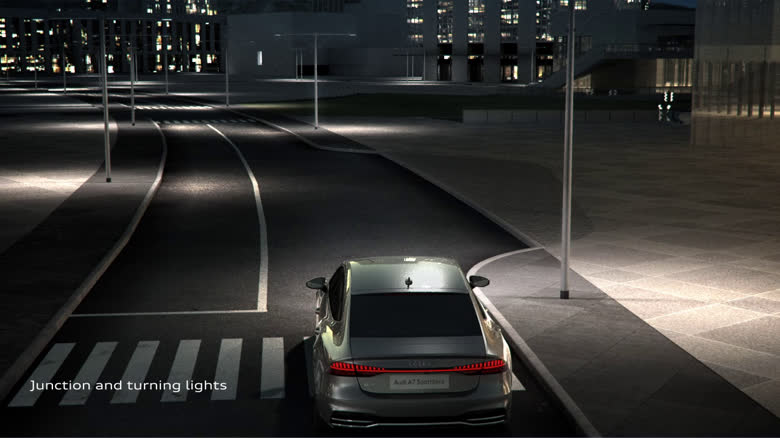
The A7 Sportback is a testament to Audi’s leading role in lighting technology and lighting design. The Gran Turismo’s headlights are available in three versions: in LED technology, as HD Matrix LED and as HD Matrix LED with Audi laser light.
- Available media:
-
-
Audi urban concept spyder Audi urban concept Spyder
Audi urban concept Spyder
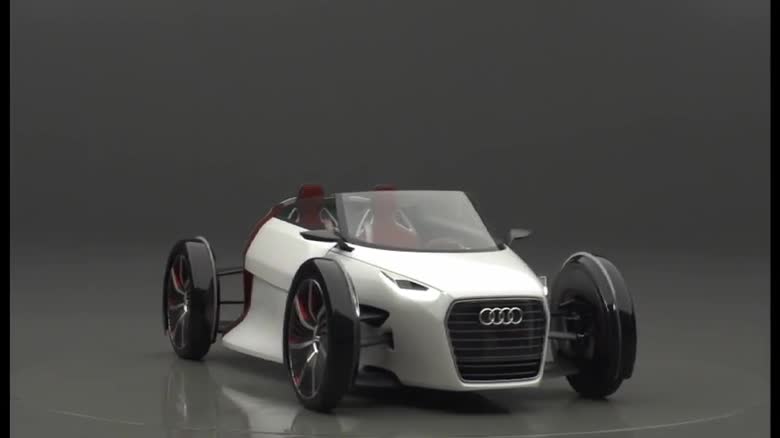
The Audi urban concept Spyder technology study is a showcase for the mobility of tomorrow. The electrically driven show car brings together elements of a race car, a roadster, a fun car and a city car.
- Available media:
-
-

Audi Urban Future Award
Audi Urban Future Award
An important aspect of the Audi Urban Future Initiative is the award established in 2010. With a prize of 100,000 Euros, it is Germany’s most highly endowed architecture competition. This year, the award is being offered for the second time and is centered on the question of how mobility can become an engine for urban development. The five participating architecture and urban planning firms are called CRIT (Mumbai), Höweler & Yoon Architecture (Boston/Washington), NODE Architecture & Urbanism (Pearl River Delta), Superpool (Istanbul) and Urban-Think Tank (São Paulo).
- Available media:
-
-
Audi A3 Sportback – Twin dosing Audi A3 Sportback – Twin dosing
Audi A3 Sportback – Twin dosing
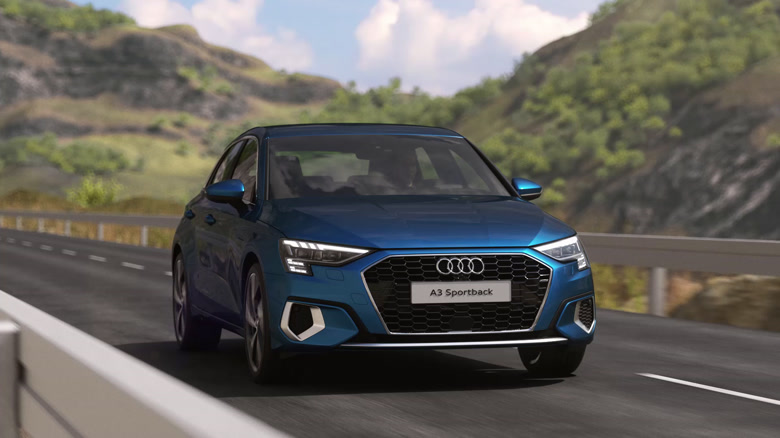
In addition, Audi is using an innovative exhaust-gas aftertreatment system in the 2.0 TDI known as twin dosing. By injecting AdBlue into the exhaust system at two separate points connected in series, it enables the injection of urea to be distributed far better and in a way that is appropriate to the situation, reducing nitrogen oxides significantly.
- Available media:
-
-
Audi A1 Sportback – Infotainment Connectivity + Lights -
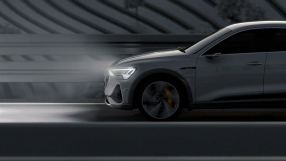
Audi e-tron Sportback - Digital Matrix LED functions Audi e-tron Sportback – Digital Matrix LED functions
Audi e-tron Sportback – Digital Matrix LED functions
Its digital matrix LED headlights are a new feature now available for the first time in a mass-production vehicle. Their light is broken down into tiny pixels and can be controlled with exceptional precision. This makes safe lane centering easier on narrow stretches of road and shows the position of the vehicle in the lane.
- Available media:
-
-
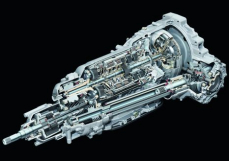
tiptronic
tiptronic
The great strength of this classic torque-converter transmission lies in its remarkably smooth shift action and starting performance. Audi uses tiptronic in many models with longitudinally mounted engines, with either six or eight gears depending on the model line.
- Available media:
-
-
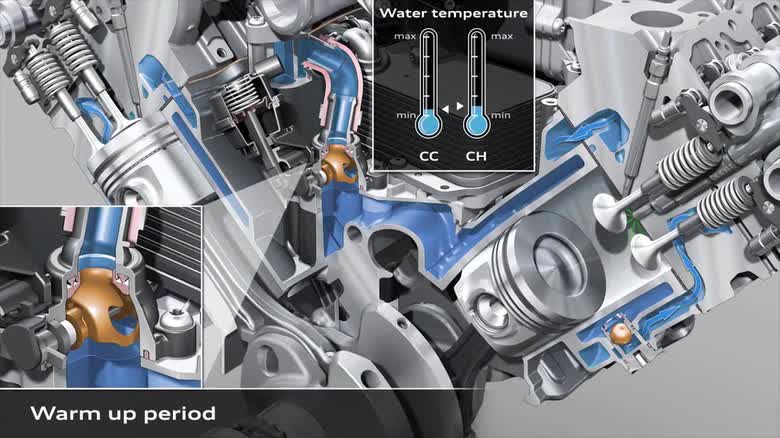
Thermal management Innovative thermal management
Innovative thermal management
The novel thermal management system, an innovation from Audi in many engines, lowers fuel consumption by up to 3 percent. Rather than being circulated, the coolant remains still during the warm-up phase so that the engine oil quickly reaches its operating temperature of between 80 and 120 degrees Celsius (between 176 and 248 degrees Fahrenheit). This significantly shortens the phase of greater frictional resistance due to viscous oil in the crankshaft drive and valve gear.
- Available media:
-
-
-
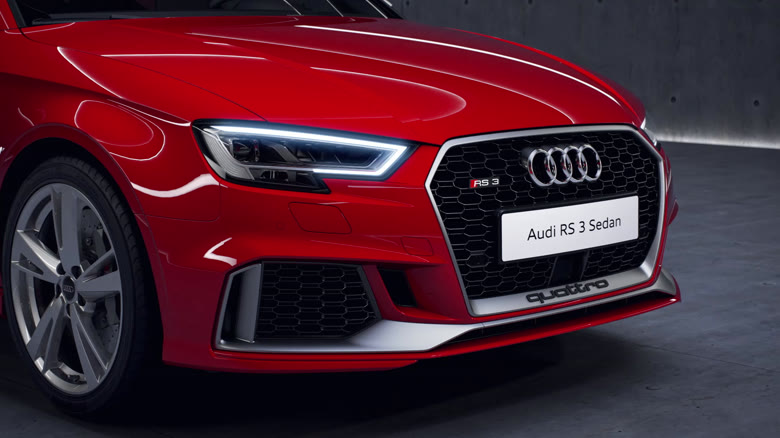
Audi RS 3 Sedan Audi RS 3 Sedan
Audi RS 3 Sedan
Since 2010, the 2.5 TFSI has been voted “International Engine of the Year” in its class for seven consecutive years. Now, Audi presents a new version of the successful power unit. The turbo engine which drives the new RS 3 Sedan* and the facelifted RS 3 Sportback* is the most powerful series-production five-cylinder engine on the world market.
- Available media:
-
-
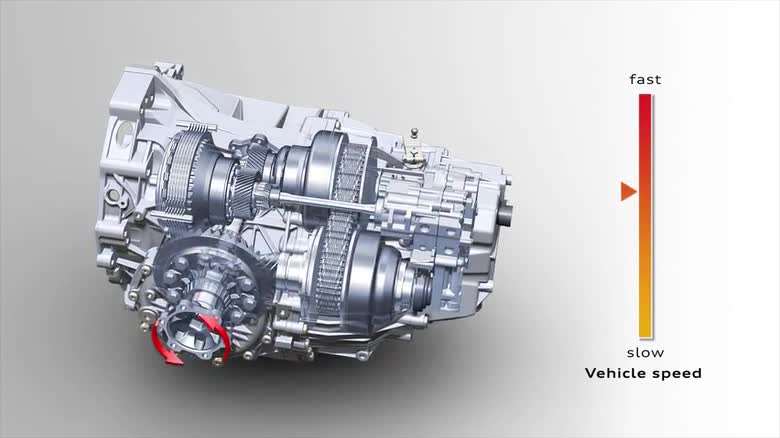
multitronic multitronic
multitronic
The continuously variable multitronic is an option for many Audi models with a longitudinal engine and front-wheel drive. Like all transmissions from Audi, it offers outstanding features such as low internal friction, a wide gear-ratio spread and high efficiency. The smooth multitronic nearly always allows the engine to operate in its optimal efficiency range. For dynamic drivers, it offers a sport program with closer gear ratios and a manual mode with eight stepped gears.
- Available media:
-
-
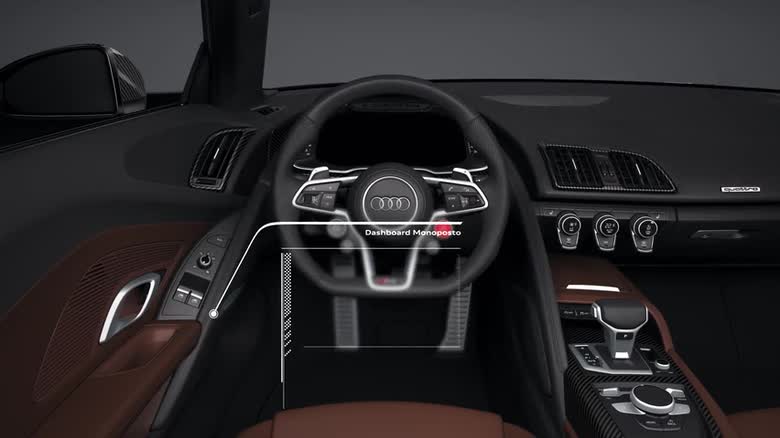
Audi R8 - Interior and Controls Controls and displays
Controls and displays
Clearly structured and intuitive controls are one of Audi’s great strengths. This is true of every model, from the A1 to the R8 and from the Q7 to the A8. The driver is perfectly integrated in the cockpit of every Audi. The large instruments can be easily read at a glance. Every last control element is logically arranged; each of them provides clear and precise haptic and acoustic feedback when it is actuated.
- Available media:
-
-
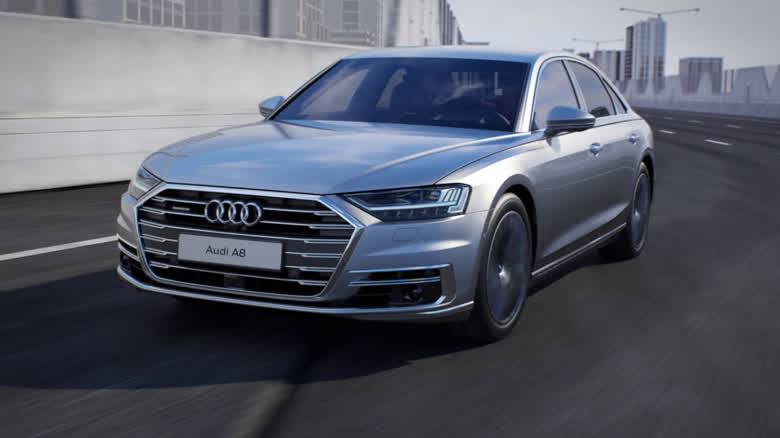
Audi A8 - Dynamic all-wheel steering Audi A8 – Dynamic all-wheel steering
Audi A8 – Dynamic all-wheel steering
Boundaries pushed: dynamic all-wheel steering
There is another world first in the suspension of the new A8: dynamic all-wheel steering. It, too, is controlled by the electronic suspension platform (ESP). The new steering system approaches the steer angle and directional stability as separate issues, once again probing the boundaries of the physically possible. At low speeds and on tight bends, the luxury sedan significantly reduces steering effort. But this is never allowed to unsettle it. The A8 is even unruffled by an abrupt lane change at high speed. The driver always feels intensive, finely differentiated feedback from the road.- Available media:
-
-
Audi A7 Sportback – Predictive Efficiency Assistant -
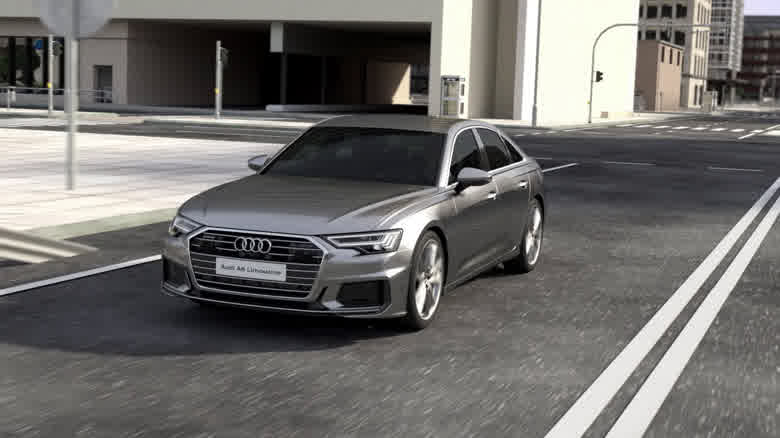
Audi A6 Limousine – Adaptive Cruise Assist