-
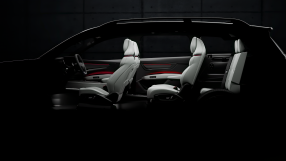
Audi Q9 Prototype – Interior and illuminated glass roof Audi Q9 Prototype – Interior and illuminated glass roof
Audi Q9 Prototype – Interior and illuminated glass roof
There are cars whose inner qualities say more than impressive performance data. Audi's first large full-size SUV is one of them. At the heart of the new Audi Q9 is a spacious, exclusive interior – conceived as a sanctuary for family, business, and long journeys. Behind its doors – which are electrically powered for the first time – Audi’s new flagship model offers up to seven seats, easy access to the third row, and a large, illuminated panoramic sunroof with switchable transparency. The new 4D sound system turns music into an immersive experience. The Q9 will be launched in around two months, but one thing is already clear: the journey begins the moment you step inside.
- Available media:
-

-
-
Audi Q4 e-tron – Bidirectional charging Audi Q4 e-tron – Bidirectional charging
Audi Q4 e-tron – Bidirectional charging
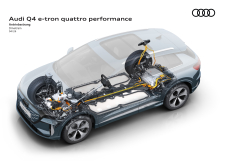
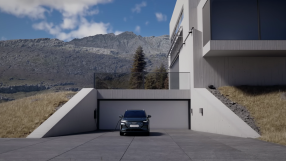
The Q4 e-tron* is the first Audi model to support bidirectional charging – its high-voltage battery can both receive energy from the grid and feed it back to external devices. For example, the Vehicle-to-Load (V2L) function allows e-bikes to be charged from a power socket in the trunk or via an adapter on the charging port. In Germany, Austria, and Switzerland, the Q4 e-tron* can also serve as a home battery supplying stored energy to the household through Vehicle-to-Home (V2H). This is especially beneficial for optimizing self-consumption from solar panels.
- Available media:
-
-

Audi RS 3 competition limited – Suspension Audi RS 3 competition limited – Suspension
Audi RS 3 competition limited – Suspension
When driven, the RS 3 competition limited* lives up to its sporting pedigree thanks to a coilover suspension and a stiffer rear stabilizer. Visually, extra carbon elements leave no doubt about its credentials.
- Available media:
-
-
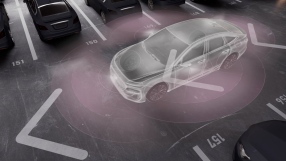
PPE- und PPC-Modelle, Elektronikarchitektur E3: Comfort and parking functions PPE- und PPC-Modelle, Elektronikarchitektur E3: Comfort and parking functions
PPE- und PPC-Modelle, Elektronikarchitektur E3: Comfort and parking functions
Audi models based on the Premium Platform Electric (PPE) and Premium Platform Combustion (PPC) will receive a comprehensive hardware and software update at the start of the new model year. New features will be added to the A5, A6, Q5, A6 e-tron, and Q6 e-tron series.
- Available media:
-
-

PPE and PPC models, E3 electronics architecture – Hardware and software update PPE and PPC models, E3 electronics architecture – Hardware and software update
PPE and PPC models, E3 electronics architecture – Hardware and software update
Audi models based on the Premium Platform Electric (PPE) and
Premium Platform Combustion (PPC) will receive a comprehensive
hardware and software update at the start of the new model year.
New features will be added to the A5, A6, Q5, A6 e-tron, and Q6 e-tron series.- Available media:
-

-
PPE- und PPC-Modelle, Elektronikarchitektur E3: Safty and driving dynamics PPE- und PPC-Modelle, Elektronikarchitektur E3: Safty and driving dynamics
PPE- und PPC-Modelle, Elektronikarchitektur E3: Safty and driving dynamics
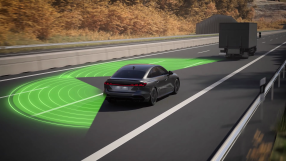
Audi models based on the Premium Platform Electric (PPE) and Premium Platform Combustion (PPC) will receive a comprehensive hardware and software update at the start of the new model year. New features will be added to the A5, A6, Q5, A6 e-tron, and Q6 e-tron series.
- Available media:
-
-
Audi RS 5 – quattro with Dynamic Torque Control Audi RS 5 – quattro with Dynamic Torque Control
Audi RS 5 – quattro with Dynamic Torque Control
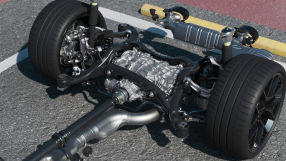
World-first quattro with Dynamic Torque Control in the rear transaxle
brings handling to a new levelquattro with Dynamic Torque Control: precision near the limit Audi is bringing a world first in a production vehicle with the RS 5: Dynamic Torque Control in the rear transaxle. Electro mechanical torque vectoring is the invisible maestro conducting an orchestra of driving fun and safety like never before.
- Available media:
-
-
-
Audi RS 5 – Operating strategy and battery management Audi RS 5 – Operating strategy and battery management
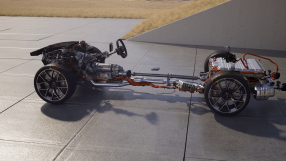
Audi RS 5 – Operating strategy and battery management
Intelligent energy recovery: coasting and braking recouperation
The times during which the driver doesn’t have their foot on the throttle are of major importance to the plug-in hybrid’s efficiency. Energy recovery (recouperation) is controlled
depending on the selected gear in accordance with a pre-defined deceleration rate. In addition, automatic recouperation can be activated via the MMI. It lets the vehicle vary regeneration automatically.- Available media:
-
-
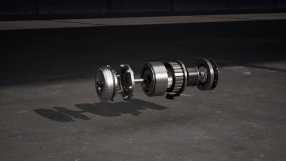
Audi RS 5 – Electrified powertrain with electric motor Audi RS 5 – Electrified powertrain with electric motor
Audi RS 5 – Electrified powertrain with electric motor
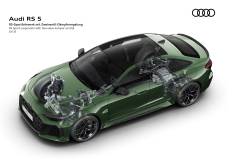
The new Audi RS 5* is Audi Sport’s first high-performance
plug-in hybrid (PHEV) With real RS DNA and the highly-tuned hybrid-technology to match. Whether carving canyons, running highway marathons, or gliding through town on electric power – the RS 5* masters any situation with agility and impressive precision. It covers an extremely wide spread of driving dynamics – from comfortable every-day companion to potent performer.
- Available media:
-
-
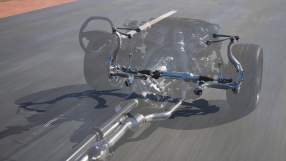
Audi RS 5 – Chassis technology Audi RS 5 – Chassis technology
Audi RS 5 – Chassis technology
Agile: the chassis
The accurate interplay between all suspension components defines the driving characteristics of the Audi RS 5*. The standouts: optimized and RS-specific front and rear axles, RS sport suspension with innovative twin-valve shock absorbers, RS-tuned steering, large 20-inch and 21-inch wheels shod in specifically tailored tires, and powerful steel or ceramic brakes.
- Available media:
-
-

Audi RS 5 – Integrated brake control system with ABS 2.0 Audi RS 5 – Integrated brake control system with ABS 2.0
Audi RS 5 – Integrated brake control system with ABS 2.0
Integrated brake regulation system (iBRS)
The integrated brake regulation system (iBRS) of the RS 5* is blending-capable and operates through brake-by-wire. During deceleration, the system primarily uses regenerative braking (recouperation), only when more braking force is needed are the friction brakes deployed. A newly developed and specifically tuned ABS software version 2.0 ensures finely dosed and direct adjustments and meshes perfectly with the steel or ceramic brakes’ high performance. As a result, the RS 5* offers fast and safe braking under any conditions.- Available media:
-
-
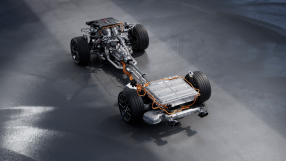
Audi RS 5 – Drive concept Audi RS 5 – Drive concept
Audi RS 5 – Drive concept
For the first time at Audi Sport, the powertrain pairs a 2.9-liter twin-turbo V6 outputting 375 kW (510 PS) and a 130 kW electric motor.
They are joined by bespoke RS sport suspension with twin-valve shock absorbers and a completely new quattro drivetrain with Dynamic Torque Control, enabling electromechanical torque vectoring at the rear as a world first. The new center differential has a preload to always remain partially locked, managing longitudinal torque distribution.
- Available media:
-
-
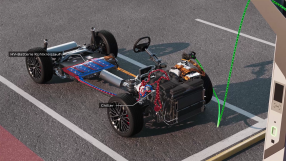
Audi Q3 Sportback e-hybrid 200kW – Thermomanagement Audi Q3 Sportback e-hybrid 200kW – Thermomanagement
Audi Q3 Sportback e-hybrid 200kW – Thermomanagement
This technical animation shows the function of the thermal management in the Audi Q3 e-hybrid. Audi Q3 Sportback e-hybrid 200 kW: Fuel consumption (weighted combined): 2.2–1.7 l/100 km; power consumption (weighted combined): 15.1–14.0 kWh/100 km; CO2 emissions (weighted combined): 50–40 g/km; CO2 class (weighted combined): B; fuel consumption with discharged battery (combined): 6.7–6.0 l/100 km; CO2 class with discharged battery
- Available media:
-
-
Audi Q3 Sportback e-hybrid 200kW – battery an DC charging technology Audi Q3 Sportback e-hybrid 200kW – battery an DC charging technology
Audi Q3 Sportback e-hybrid 200kW – battery an DC charging technology
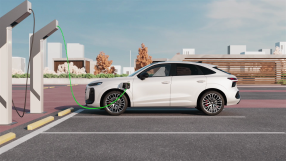
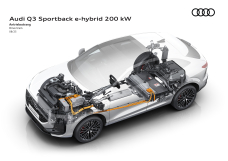
The plug-in hybrid models – the Audi Q3 SUV e-hybrid* and
Audi Q3 Sportback e-hybrid* – deliver a system output of 200 kW, can charge with up to 50 kW
DC under ideal conditions, and are more powerful and efficient than ever before.- Available media:
-
-
Audi RS 3 – Design and daytime running light Audi RS 3 – Design and daytime running lights
Audi RS 3 – Design and daytime running lights
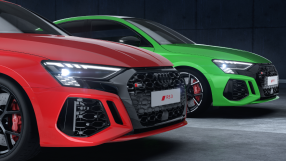
The design of the new Audi RS 32 is even more dynamic and powerful than that of its predecessor. In the front, the wide RS bumper, the redesigned Singleframe with its distinctive honeycomb grille, and the large air intakes give the compact sports car an expressive appearance.
- Available media:
-
-
Audi RS 3 – Interior design Audi RS 3 – Interior design
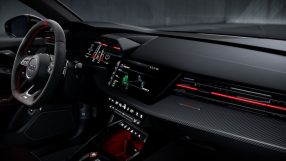
In the interior, too, many elements specific to the RS accentuate its sportiness. The RS-specific blinking shift indicator in manual transmission mode changes the rpm display from green to yellow to red, blinking in a manner identical to that used in motorsports, to indicate the ideal time to change gears. The genuine racing feeling is further enhanced by the carbon inlay in the instrument panel and RS sport seats with RS embossing and anthracite contrast stitching.
- Available media:
-
-
Audi Q3 Sportback e-hybrid 200 kW – 1.5 TFSI evo2 - Combustion technology Audi Q3 Sportback e-hybrid 200 kW – 1.5 TFSI evo2 - Combustion technology
Audi Q3 Sportback e-hybrid 200 kW – 1.5 TFSI evo2 - Combustion technology
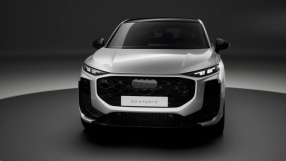
The interaction of a 1.5 TFSI engine with
130 kW (177 PS) and the electric motor provides a total system output of 200 kW (272 PS) in
the Q3 e-hybrid [fuel consumption (weighted combined)*: 2.2–1.7 l/100 km; power
consumption (weighted combined): 15.0–13.9 kWh/100 km; CO2 emissions (weighted
combined): 49–39 g/km; CO2 class (weighted combined): B; fuel consumption with discharged
battery (combined): 6.6–6.0 l/100 km; CO2 class with discharged battery: E] and 400 Nm of
system torque.- Available media:
-
-
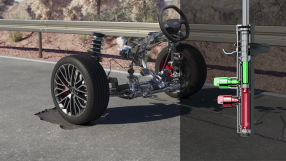
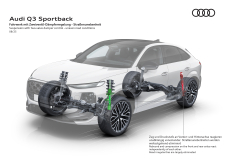
Audi Q3 Sportback e-hybrid 200kW – Chassis technology Audi Q3 Sportback e-hybrid 200kW – Chassis technology
Audi Q3 Sportback e-hybrid 200kW – Chassis technology
New damper system for comfort and power
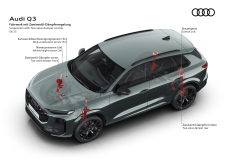
In addition to the engines, Audi has also significantly improved the driving dynamics of the new Audi Q3*. The further developed standard suspension delivers an improved driving experience. All in all, this dynamically designed vehicle is a family car suitable for everyday use as well as travel and impresses with its agility.
- Available media:
-
-
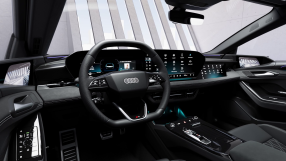
Audi S6 e-tron – Interior technologies Audi S6 e-tron – Interior technologies
Audi S6 e-tron – Interior technologies
A smart panoramic glass roof with switchable transparency
An optional innovative panoramic glass roof further enhances the vehicles. In contrast to previous types, the panoramic roof's smart glass minimizes direct sunlight and becomes opaque at the touch of a button.- Available media:
-
-
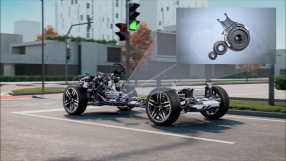
Audi Q5 SUV – Electrified 3.0 V6 TDI with MHEV plus technology and electric powered compressor Audi Q5 SUV – Electrified 3.0 V6 TDI
Audi Q5 SUV – Electrified 3.0 V6 TDI
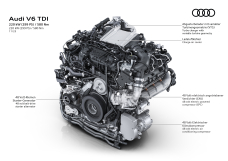
New evolution of the V6 TDI with MHEV plus technology and electrically powered compressor.
- Available media:
-
-
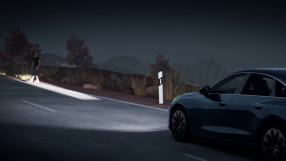
Audi A6 Sedan – Lighting technology Audi A6 Sedan – Lighting technology
Audi A6 Sedan – Lighting technology
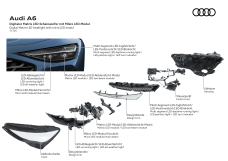
Digital matrix LED headlights will be a new addition to the Audi A6 portfolio. They offer a high degree of personalization and adaptive, high-resolution lighting functions thanks to the new micro-LED technology. These headlights significantly improve illumination and create a strong contrast on the road.
- Available media:
-
-
-
-
Audi Q3 SUV – Digital matrix LED functions with micro LED technology Audi Q3 SUV – Digital matrix LED functions with micro LED technology
Audi Q3 SUV – Digital matrix LED functions with micro LED technology
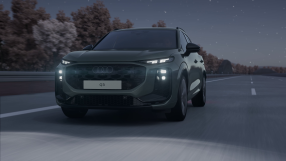
At the front of the Audi Q3*, digital Matrix LED headlights feature the micro-LED module used
for the first time in this model. The use of this micro-LED technology improves illumination
significantly and thus ensures a strong contrast on the road.- Available media:
-
-
Audi Q8 e-tron – Brake by wire Audi Q8 e-tron – Brake-by-Wire
Audi Q8 e-tron – Brake-by-Wire
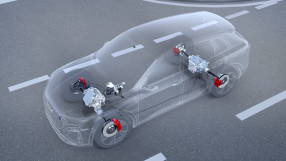
Electrohydraulically integrated brake system
The technical prerequisite for the efficient recuperation properties in the Audi Q8 e-tron* is the brake-by-wire braking system – it completely decouples the brake pedal and brake hydraulics. When the driver presses the brake pedal, the system calculates whether the generators’ recuperation power is sufficient for the desired deceleration or whether it’s necessary to use the disc brakes on the front and rear axles. Audi was the first manufacturer in the world to use this electrohydraulically integrated brake control system in a mass-produced electric-drive vehicle, when it introduced the e-tron series.
- Available media:
-
-
-
-
-
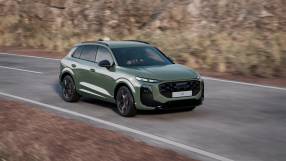
Audi Q3 SUV TFSI quattro – quattro drive and torque distribution Audi Q3 SUV TFSI quattro – quattro drive and torque distribution
Audi Q3 SUV TFSI quattro – quattro drive and torque distribution
Above that option, the 2.0 TFSI delivers 150 kW (204 PS) of power and 320 Nm of torque
(combined fuel consumption in l/100 km: 8.4–7.8; combined CO2 emissions in g/km: 192–176;
CO2 class: G) a four-cylinder gasoline engine with quattro all-wheel drive.- Available media:
-
-
-
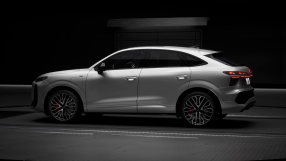
Audi Q3 Sportback - Design and aeracoustics Audi Q3 Sportback - Design and aeracoustics
Audi Q3 Sportback - Design and aeracoustics
Audi Q3 Sportback
The Audi Q3 at its finest: dynamic and muscular proportions balanced with a spacious interior
08/25
- Available media:
-
-
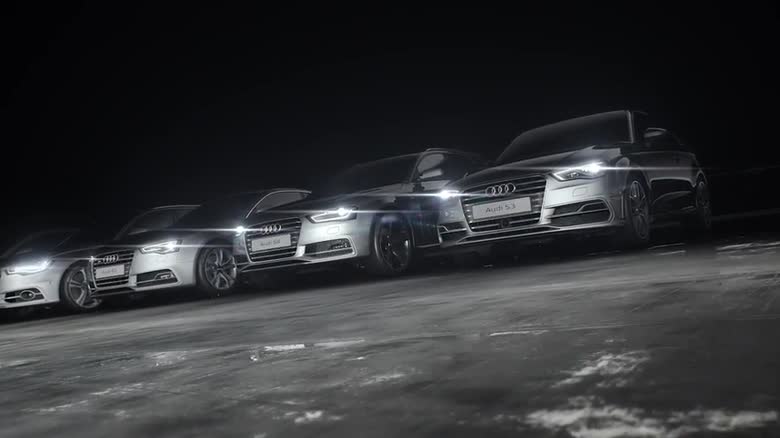
Audi LED lighting technology LED headlights
LED headlights
The LED headlights are an area of technology in which Audi is well ahead of the competition. They were introduced in 2008 on the R8 high-performance sports car; since then the brand with the four rings has repeatedly extended its lead.
- Available media:
-
-
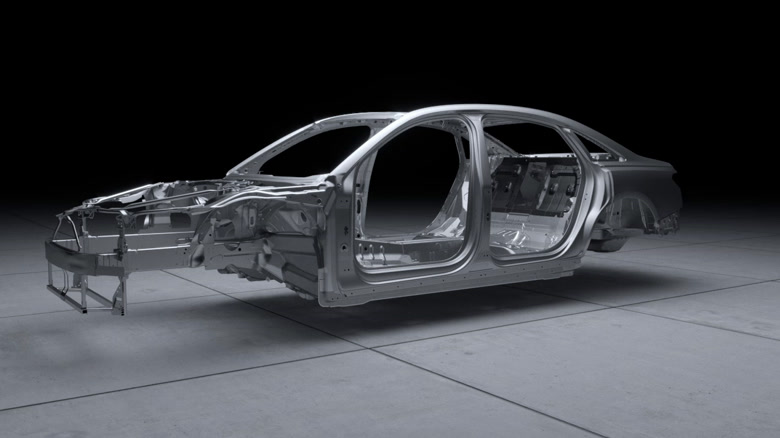
Audi A8 - Multimaterial Audi Space Frame Audi Space Frame
Audi Space Frame
When it introduced the first A8 in 1994, Audi had not only developed the radically new ASF design and put it into series production, it had also developed all of the steps required for its production. The launch was preceded by a development process lasting 12 years. Since this time Audi has built on its competitive edge step by step. The arc spans three generations of the A8 and also includes the A2 along with its legendary three-liter version, the A2 1.2 TDI. By the end of 2010 alone, the company had produced some 550,000 vehicles with the ASF body – far more than any other manufacturer in the world.
- Available media:
-
-
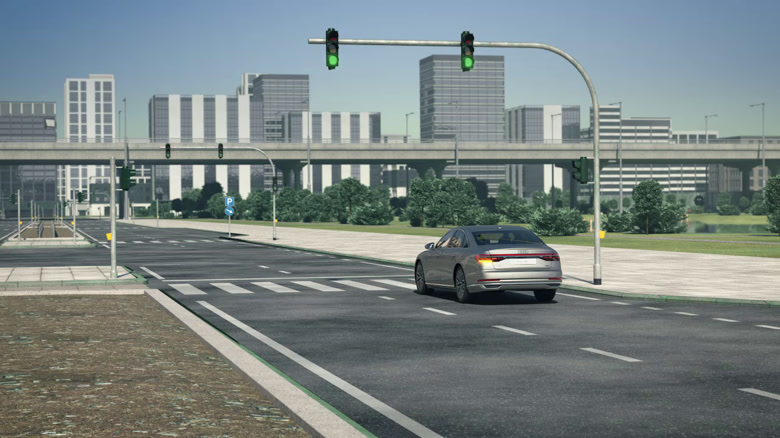
Audi A8 - Central driver assistance controller (zFAS) Audi A8 – Central driver assistance controller (zFAS)
Audi A8 – Central driver assistance controller (zFAS)
There have previously been several control units, each evaluating the information they pick up for a defined function. Now for the first time, a central driver assistance controller (zFAS) permanently forms a comprehensive image of the surroundings from the sensor data – for a wide range of assistance functions.
- Available media:
-
-
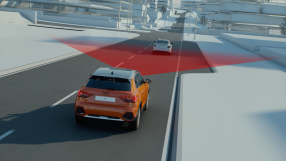
Audi A1 citycarver – amazon Alexa and driver assistance system Audi A1 citycarver – Amazon Alexa and driver assistance systems
Audi A1 citycarver – Amazon Alexa and driver assistance systems
The assist systems, which include adaptive cruise control and park assist, are taken from the full-size class. Audi pre sense front (pedestrian and cyclist detection) and lane departure warning are standard.
- Available media:
-
-
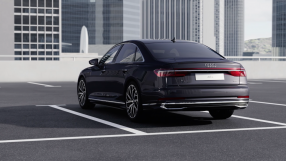
Audi A8 – Remote park assist plus Audi A8 – Remote park assist plus
Audi A8 – Remote park assist plus
There are about 40 driver assistance systems available in the enhanced Audi A8. Some of them – including the Audi pre sense basic and Audi pre sense front safety systems – are standard equipment for the series. Options are clustered into the “Park,” “City,” and “Tour” packages.
- Available media:
-
-
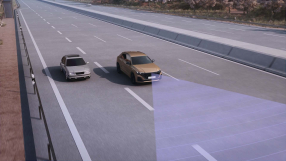
Audi Q8 – Assistenzpaket Parken plus und adaptiver Geschwindigkeitsassistent Audi Q8 – Assist package Park plus and adaptive cruise control
Audi Q8 – Assist package Park plus and adaptive cruise control
This animation explains the function of different driving assistants in the Audi Q8. This includes the remote park assist plus, which allows for convenient parking even in tight parking spaces and the adaptive cruise control which maintains a preset distance from the traffic ahead.
- Available media:
-
-
Audi Q3 SUV – Interior and operating concept Audi Q3 SUV – Interior and operating concept
Audi Q3 SUV – Interior and operating concept
The interior: functional and clearly designed
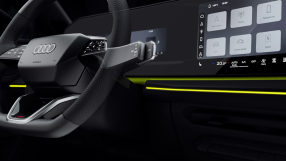
Compared to the previous model, the design and functionality have been significantly improved. Its high-contrast design deliberately places elements in the foreground or background, creating a cozy interior feel. A generous application area, the so-called Softwrap, extends from the doors across the entire width of the dashboard, highlighting the horizontal alignment for a maximum sense of space. The panoramic display with 11.9-inch instrument cluster and 12.8-inch MMI touch display forms the so-called digital stage. Its curved design creates a driver-oriented cockpit layout. Audi is thus transferring the digital stage from the full-size class to the compact segment. A head-up display for important information supplements the digital displays. Flat door handles and a modern, uncluttered console underscore the feeling of space and comfort.
- Available media:
-
-
Audi Q3 SUV – Exterior design Audi Q3 SUV – Exterior design
Audi Q3 SUV – Exterior design
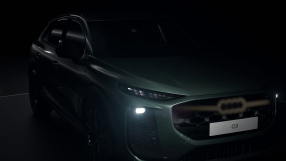
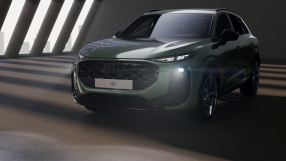
Compared to its predecessor, the new Audi Q3 has an even more muscular and emotional design. Its body is defined by the perfect combination of rounded sections and precise lines. The wide Singleframe is positioned high up, and the sleekly tapered headlights create a focused look and are fully integrated into the vehicle's aerodynamic concept.
- Available media:
-
-
Audi Q3 SUV – Lighting technology Audi Q3 SUV – Lighting technology
Audi Q3 SUV – Lighting technology
The rear section is adorned with optional digital OLED rear lights, complemented by a continuous LED light strip and the illuminated rings. This level of lighting technology offered in the new Audi 03 is available for the first time in the Audi compact segment.
- Available media:
-
-
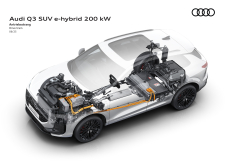
Audi Q3 SUV e-hybrid 200 kW – Plug-in hybrid powertrain Audi Q3 SUV e-hybrid 200 kW – Plug-in hybrid powertrain
Audi Q3 SUV e-hybrid 200 kW – Plug-in hybrid powertrain
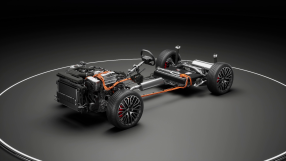
The Audi Q3 SUV e-hybrid 200 kW can charge up to 50 kW with DC power under ideal conditions and is more powerful and efficient than ever before. A high-voltage battery with a gross capacity of 25.7 kWh (net 19.7 kWh) was installed for that purpose. This battery enables an electric range of up to 119 kilometers in the WLTP test cycle.
- Available media:
-
-
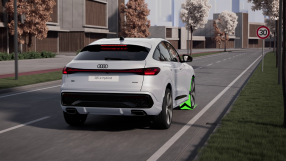
Audi Q5 e-hybrid – Plug-in hybrid powertrain Audi Q5 e-hybrid – Plug-in hybrid powertrain
Audi Q5 e-hybrid – Plug-in hybrid powertrain
The Audi Q5 e-hybrid: all-rounder with great electric range
High-voltage battery with larger capacity, increased recouperation, and intelligent hybrid management ensure efficiency and performance
- Available media:
-
-

Audi A5 e-hybrid quattro Integrated brake control system iBCS Audi A5 e-hybrid quattro Integrated brake control system iBCS
Audi A5 e-hybrid quattro Integrated brake control system iBCS
The integrated brake control system with blending capability (iBRS) ensures pressure-free braking and the best possible energy recovery. The hydraulic wheel brakes are only used for harder braking maneuvers.
- Available media:
-
-
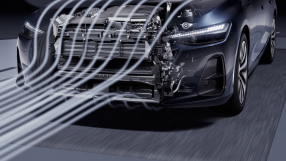
Audi A6 Sedan - Aerodynamics Audi A6 Sedan - Aerodynamics
Audi A6 Sedan - Aerodynamics
Aerodynamics: the best drag coefficient of an Audi with a combustion engine
The sporty and low design of the new Audi A6 Sedan contributes to its outstanding aerodynamics, ensuring a drag coefficient (Cd value) of 0.23. This is the best value of any series-produced model with a combustion engine in Audi history. Air curtains are used to ensure that the airflow around the front wheels and sides of the vehicle is as smooth as possible. These have been seamlessly integrated into the new design of the A6 Sedan*. Two separately controllable cool-air intakes behind the Singleframe radiator grille are part of the aerodynamics concept. They ensure optimized airflow around the engine bay. To harness the full potential of this technology, Audi has also optimized the seal between the bumper and the cooling unit, reducing airflow losses in this area by up to 70 percent. To achieve this, the air control elements were made significantly more rigid. The unified interface for the air intake and for engine cooling also contributes to improved airflow around the body. Furthermore, a front spoiler in the front bumper reduces front-axle lift and ensures better airflow around the underbody. In addition, numerous panels on the vehicle’s underside ensure controlled and harmonious airflow. These include wheel spoilers and specific covers on the transmission tunnel and rear axle.
04/25
- Available media:
-
-
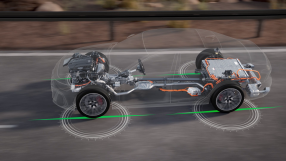
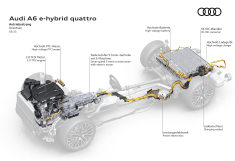
Audi A6 e-hybrid quattro - Plug-in hybrid powertrain Audi A6 e-hybrid quattro - Plug-in hybrid powertrain
Audi A6 e-hybrid quattro - Plug-in hybrid powertrain
Audi A6 e-hybrid quattro
Increased efficiency and performance thanks to high-voltage battery with more capacity, smart recuperation strategy, and intelligent hybrid management
- Available media:
-
-
-
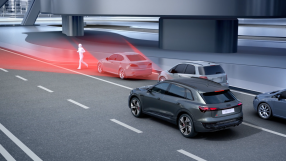
Audi Q8 e-tron – Integrated brake control system Audi Q8 e-tron – Integrated Brake Control System
Audi Q8 e-tron – Integrated Brake Control System
Electrohydraulically integrated brake system
The technical prerequisite for the efficient recuperation properties in the Audi Q8 e-tron* is the brake-by-wire braking system – it completely decouples the brake pedal and brake hydraulics. When the driver presses the brake pedal, the system calculates whether the generators’ recuperation power is sufficient for the desired deceleration or whether it’s necessary to use the disc brakes on the front and rear axles. Audi was the first manufacturer in the world to use this electrohydraulically integrated brake control system in a mass-produced electric-drive vehicle, when it introduced the e-tron series.
- Available media:
-
-
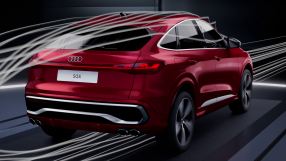
Audi SQ5 - Design and aerodynamics Audi SQ5 Sportback - Design and aerodynamics
Audi SQ5 Sportback - Design and aerodynamics
Sporty design thanks to dynamic, sloping roofline
The unmistakable design exudes sportiness with its characteristic sloping rear and elegant lines.
- Available media:
-
-
-
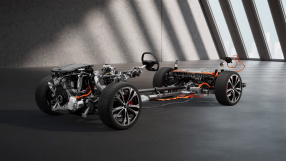
Audi A5 e-hybrid quattro - Plug-in hybrid powertrain Audi A5 e-hybrid quattro - Plug-in hybrid powertrain
Audi A5 e-hybrid quattro - Plug-in hybrid powertrain
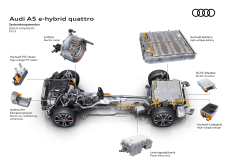
New Audi A5 e-hybrids combine dynamics, efficiency, and long electric range
- Audi offers both the Avant and Sedan as e-hybrid quattro in two power levels with up to 270 kilowatts of total output
- Increased efficiency and power availability due to HV battery with more capacity, higher energy density, and smart recuperation strategy
- Intelligent hybrid management ensures optimum operating strategy and an electric range of up to 110 kilometers (68 mi)
03/2025
- Available media:
-
- Audi offers both the Avant and Sedan as e-hybrid quattro in two power levels with up to 270 kilowatts of total output
-
-
Audi A6 Avant - Illustrations
Audi A6 Avant - Illustrations
- Available media:
-
-
Audi Q6 Sportback e-tron – Operation, infotainment and AR HuD Audi Q6 Sportback e-tron – Operation, infotainment Augmented Reality Head-up-Display
Audi Q6 Sportback e-tron – Operation, infotainment Augmented Reality Head-up-Display
The digital stage: the new display and operating concept
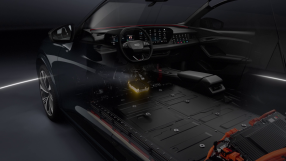
Like their SUV sister model, the Q6 Sportback e-tron*, the A6 e-tron, A5, and the Q5 series models include a new display and operating concept. Above the soft wrap, the digital stage with the Audi MMI panoramic display and the MMI passenger display dominates the interior. The slim, free-standing Audi MMI panoramic display features a curved design and OLED technology. It comprises an 11.9” Audi virtual cockpit and a 14.5” MMI touch display. The digital stage is complemented by an optional 10.9” MMI passenger display with active privacy mode.
- Available media:
-
-
Audi A3 Sportback 45 TFSI e Plug-in hybrid with DC charging technology Audi A3 Sportback 45 TFSI e Plug-in hybrid with DC charging technology
Audi A3 Sportback 45 TFSI e Plug-in hybrid with DC charging technology
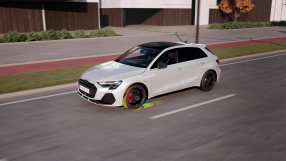
More powerful and efficient than ever: the new A3 Sportback TFSI e
With a higher battery capacity, DC charging at fast-charging stations, and an electric range of up to 143 kilometers, the Audi A3 Sportback TFSI e* is undergoing a comprehensive technology upgrade. Its intelligent drive management ensures outstanding efficiency, high recuperation performance, and locally emission-free driving over long distances in everyday life. The plug-in hybrid combines dynamic handling with increased comfort.- Available media:
-
-
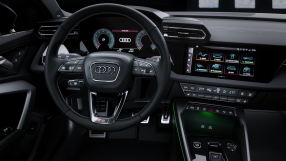
Audi A3 Sportback - Interior Audi A3 Sportback – Interior
Audi A3 Sportback – Interior
To match the more striking exterior, the interior has also been significantly sharpened. There are quite a few innovations here – from the shifter design and air vents to the decorative fabric inlays and new interior lighting. All these elements are precise and detailed, emphasizing the vehicle’s progressive and technical look.
- Available media:
-
-
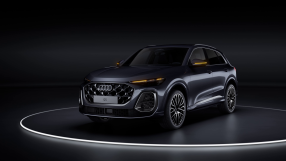
Audi Q5 - Lighting technology Audi Q5 - Lighting Technology
Audi Q5 - Lighting Technology
Impressive by day and night: the lighting design
With the new Audi Q5 SUV, Audi not only underlines its leading role in lighting design and technology, but also goes one step further. The rear lights have a three-dimensional design, spectacularly bringing together the physical and digital worlds in combination with the light strip, which spans the entire width of the vehicle.
At the rear, the strikingly designed second-generation digital OLED rear lights and the projection light in the spoiler above the rear window, used for the first time in Europe, deliver increased safety. It projects a graphic into the upper rear window area, thereby enlarging the brake light area. It is also integrated into the Coming Home and Leaving Home scene when leaving and unlocking the vehicle.In the case of the second-generation digital OLED combination rearlights, the six digital OLED panels with a total of 266 segments generate a new image several times per second using a specially developed algorithm.
- Available media:
-
-
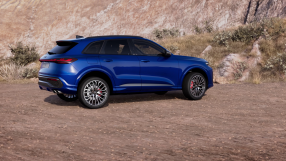
Audi SQ5 - chassis technology Audi SQ5 - chassis technology
Audi SQ5 - chassis technology
Agile handling and comfort
The new Audi Q5 SUV offers driving characteristics typical of the brand, with largely neutral handling, and achieves a noticeable increase in comfort thanks to its optimized suspension and steering set-up.
It rolls off the production line with dynamically tuned steel suspension as standard. Alternatively, a sports suspension (standard on the Audi SQ52 is available. The steel spring suspension, in combination with the passive damping system FSD (Frequency Selective Damping) and a more agile front axle, gives the Q5 an even firmer ride on the road. FSD reduces damping forces, particularly at high frequencies – for example on cobblestones – and maintains high damping forces at low frequencies, such as those that occur when changing lanes or cornering. Adaptive damper control is available in the optional air suspension. The basic configuration of this air suspension can be adapted to individual requirements via Audi drive select. Compared to the predecessor model, it offers a much more noticeable spread between comfort and sport mode. The new Q5 is offered with enhanced progressive steering as standard.
- Available media:
-
-
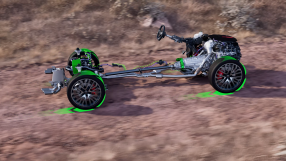
Audi SQ5 - 3.0 TFSI with MHEV plus technology Audi SQ5 - 3.0 TFSI with MHEV plus technology
Audi SQ5 - 3.0 TFSI with MHEV plus technology
Ultra-modern combustion engines with MHEV plus
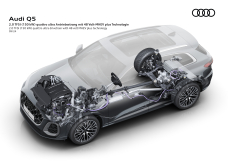
The new Audi Q5 SUV family is based on the Premium Platform Combustion (PPC), a platform architecture for conventionally powered vehicles with longitudinally installed combustion engines. All models in the Q5 series at market launch are equipped with the highly efficient MHEV plus technology.
The new MHEV plus system with 48-volt electrical system supports the combustion engine, reduces CO2 emissions and at the same time increases performance and driving comfort. Purely electric maneuvering and parking are also possible to a limited extent.
The powertrain generator (PTG) generates an additional drive torque of up to 230 Newton meters and up to 18 kW (24 hp) of power. The 48-volt system also enables the use of an electrically driven air conditioning compressor. This offers the advantage that even when the engine is switched off – for example when coasting or at a red light – the air conditioning system continues to operate at full power and keeps the interior at a comfortable temperature.
The lithium-ion battery of the vehicles with MHEV plus is based on lithium iron phosphate chemistry (LFP) and has a storage capacity of 1.7 kilowatt hours. The main tasks of the belt starter generator are to start the engine and supply electrical energy to the battery. The new powertrain generator (PTG) enables electric driving, relieves the combustion engine, and helps reduce fuel consumption. When decelerating, the powertrain generator (TSG) feeds up to 25 kW of energy back into the battery (recuperation). The PPC enables gradual electrification in the form of mild hybrids. Later in the lifecycle of the new Audi Q5, plug-in hybrids with a large battery and external charging option will also follow.
- Available media:
-
-
-
Audi A6 Avant - Aerodynamics Audi A6 Avant - Aerodynamics
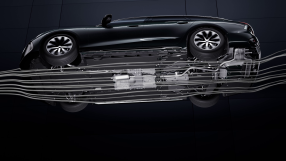
Audi A6 Avant - Aerodynamics
The perfect interplay: design and aerodynamics
With its reduced design language, the A6 Avant conveys a functional and timeless character. This is reflected in both its design and the aerodynamics, which boasts a drag coefficient of 0.25 – the best value of a combustion-engine Avant at Audi.
In addition to the large air curtains and controllable cool-air intakes at the front, the striking roof spoiler and aerodynamic panels on the sides of the rear window are the main contributors to this achievement in aerodynamics.
The sporty rear with eye-catching diffuser embodies typical Avant characteristics. Paired with the quattro blisters powerfully emerging from the shoulder area and the wide track, the rear accentuates the model’s dynamic design. At the same time, its long wheelbase and extended hood embody elegance and round off the perfect proportions of the A6 Avant.
- Available media:
-
-
-
Audi A6 Avant - chassis technology with air suspension and all-wheel steering Audi A6 Avant - chassis technology with air suspension and all-wheel steering
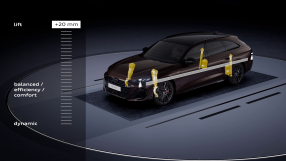
Audi A6 Avant - chassis technology with air suspension and all-wheel steering
A synthesis of sportiness and comfort: the chassis and steering
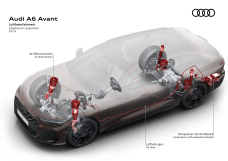
The new A6 Avant perfects the synthesis of sportiness and comfort thanks in part to optional features such as all-wheel steering and adaptive air suspension, the latter of which regulates body height and shock absorption. Moreover, the quattro sport differential ensures even greater agility.
The standard progressive steering of the new A6 Avant now responds even more directly. Compared to its predecessor, the entire path from the steering wheel to the wheels is designed to be stiffer. This includes the torsion bar, the rigidly bolted steering rack, and the stiffer control arm bushings. Camber on the front axle has also been slightly increased. All in all, these measures result in a noticeably improved steering response and more feedback from the road, which, in combination with the high-performance drive, leads to precise and light-footed handling.
All-wheel steering is available as an option in conjunction with quattro all-wheel drive. It works with a dynamic function whose reaction speed has been improved even further. At low speeds, the rear wheels turn up to five degrees in the opposite direction to the front wheels. The car is thus more agile in city traffic and in tight curves, and the turning circle is reduced by up to one meter. At medium and higher speeds, the rear wheels turn in the same direction, enabling stable and even more precise handling.
- Available media:
-
-
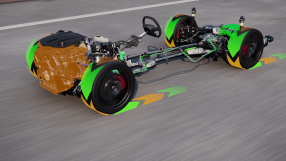
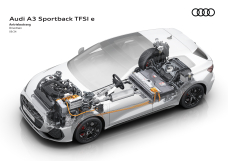
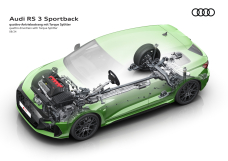
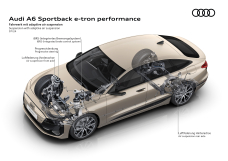
Audi A6 Avant - 3.0 V6 TFSI with MHEV plus technology Audi A6 Avant - 3.0 V6 TFSI with MHEV plus technology
Audi A6 Avant - 3.0 V6 TFSI with MHEV plus technology
Fuel-efficient and high-performance: MHEV plus technology
At its launch, the new A6 Avant will be available with three different engines – two gasoline and one diesel. Two of these three power units will feature mild hybrid technology (MHEV plus) and are therefore partially electrified.
The MHEV plus system supports the combustion-engine vehicle, enhances performance and ride quality, and reduces CO2 emissions. It consists of three main components: a 48-volt battery, a belt alternator starter, and the new powertrain generator with integrated power electronics. The lithium-ion battery, made of lithium iron phosphate, has a storage capacity of 1.7 kWh. The belt alternator starter’s primary function is to start the engine and supply the battery with electrical energy. The powertrain generator enables partially electric driving, provides additional torque, and feeds energy back into the battery during deceleration.
- Available media:
-
-
-
-
-
-
-
Audi S6 Sportback e-tron – Chassis technology Audi S6 Sportback e-tron – Fahrwerkstechnologie
Audi S6 Sportback e-tron – Fahrwerkstechnologie
Precise driving dynamics, high comfort
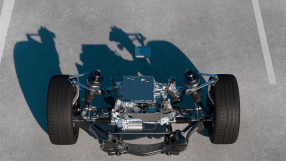
The typical Audi DNA is also evident in the suspension. Here, there is a precisely defined set-up philosophy, and the suspension control systems are accurately coordinated with each other. The directly tuned front axle significantly influences the driving dynamics of the A6 e-tron*, making the vehicle feel particularly agile.- Available media:
-
-
Audi S6 Sportback e-tron - Premium Platform Electric - Drive and driving dynamics Audi S6 Sportback e-tron – Premium Platform Electric - Drive and driving dynamics
Audi S6 Sportback e-tron – Premium Platform Electric - Drive and driving dynamics
Precise driving dynamics, high comfort
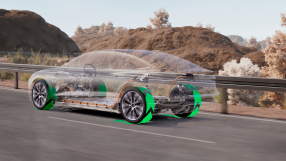
With its rear-biased tuning, the all-wheel drive ensures highly variable all-wheel drive distribution overall and is another feature that improves the driving dynamics of the Audi S6 e-tron. The different sizes of the electric motors on the front and rear axles enable a rear-heavy torque distribution even under full load. The Audi S6 e-tron and A6 e-tron are equipped with mixed tires on the front and rear axles, which further improves stability and sportiness..- Available media:
-
-
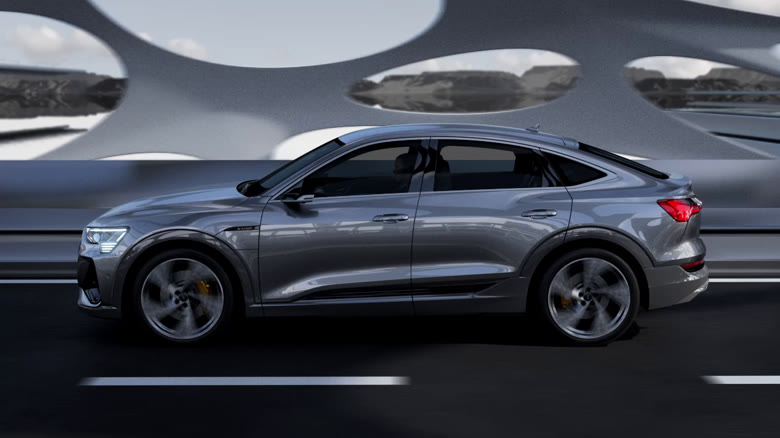
Audi e-tron Sportback - Recuperation Audi e-tron – Recuperation
Audi e-tron – Recuperation
From freewheeling to a one-pedal feeling: electric deceleration
The intelligent recuperation conceptis also tightly integrated into the Audi e-tron’selectronic management system. It is the most innovativesystem on the market andaccounts for up to 30 percent of the range.- Available media:
-
-
Audi urbansphere concept – Premium platform electric -
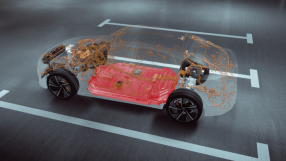
e-tron – Prediction of remaining electric range Audi e-tron – Prediction of remaining electric range
Audi e-tron – Prediction of remaining electric range
In addition to external factors such as congestion, route topography, or outside temperatures, driver-specific influences including individual driving style or the use of comfort features also play an important role. The remaining range display in the all-electric e-tron models from Audi passes this test in flying colors by factoring in all relevant parameters and providing a realistic picture.
- Available media:
-
-
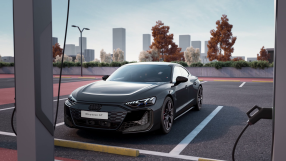
Audi RS e-tron GT performance – Drive and performance Audi RS e-tron GT performance – Drive and performance
Audi RS e-tron GT performance – Drive and performance
In addition to a permanent-magnet synchronous motor (PSM) on the front axle with a reinforced driveshaft and an output of 252 kW (342 PS), the electric Gran Turismo features a newly developed PSM on the rear axle with an output of 415 kW (564 PS).The increased copper density of the special hairpin winding in the electric motors’ stator maximizes current conduction.
- Available media:
-
-
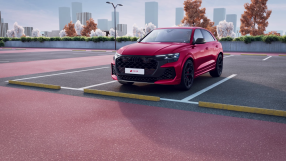
Audi RS Q8 performance – Drive technologies and driving dynamics Audi RS Q8 performance – Drive technologies and driving dynamics
Audi RS Q8 performance – Drive technologies and driving dynamics
Ready for anything: Eight-cylinder engine in two output levels
The new RS Q8 (combined fuel consumption in l/100 km: 13.6-13.0 (17.7-18.1 US mpg); combined CO2 emissions in g/km: 310-295 (262.3-474.8 g/mi); CO2 class: G) is guaranteed to impress with an output of 441 kW (600 PS) and 800 Nm of torque, which is available between 2,200 and 4,500 rpm.- Available media:
-
-
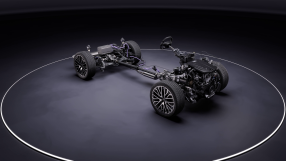
Audi Q5 - 2.0 TFSI with MHEV plus technology Audi Q5 - 2.0 TFSI with MHEV plus technology
Audi Q5 - 2.0 TFSI with MHEV plus technology
Ultra-modern combustion engnies with MHEV plus
The new Audi Q5 SUV family is based on the Premium Platform Combustion (PPC), a platform architecture for conventionally powered vehicles with longitudinally installed combustion engines. All models in the Q5 series at market launch are equipped with the highly efficient MHEV plus technology.
- Available media:
-
-
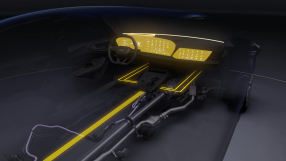
Audi S5 Sedan Operation and infotainment Audi S5 Sedan – Operation and infotainment
Audi S5 Sedan – Operation and infotainment
Technology meets comfort in the new interior
The design of the interior of the new Audi A5 is based on four characteristic features. Firstly, the interior has a human-centric design, i.e., it is consistently geared towards the needs of its users. The second special feature is the Digital Stage that establishes itself in clear view of the driver and front passenger in the form of the Audi MMI displays.- Available media:
-
-
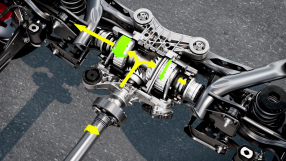
Audi RS 3 – Torque Splitter Audi RS 3 - Torque Splitter
Audi RS 3 - Torque Splitter
The Audi RS 3 prototype represents the epitome of unadulterated driving dynamics. This is Audi’s first vehicle to feature the RS Torque Splitter, which distributes drive torque between the rear wheels in a fully variable manner. This results in optimal stability and maximum agility – especially when cornering at high speeds.
- Available media:
-
-
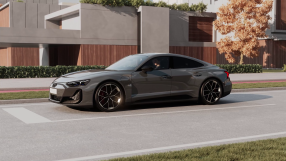
Audi RS e-tron GT performance - active suspension Audi RS e-tron GT performance - Active suspension
Audi RS e-tron GT performance - Active suspension
Active suspension and Audi drive select with individually configurable RS modes
A newly developed air suspension with 2-chamber/2-valve technology comes as standard. It affords distinct advantages in terms of driving dynamics without compromising on comfort. For the first time, an innovative, wheel-selective active suspension system is available as an option.
- Available media:
-
-
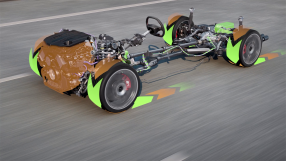
Audi S5 Avant – 3.0 V6 TFSI with MHEV plus technology Audi S5 Avant – 3.0 V6 TFSI with MHEV plus technology
Audi S5 Avant – 3.0 V6 TFSI with MHEV plus technology
Lower consumption, more agility, and comfort with MHEV plus
The new MHEV plus system, based on a 48-volt onboard electrical system, simultaneously
supports the combustion engine, reduces CO2 emissions, and increases performance. The new
powertrain generator (PTG) enables partially electric driving, which reduces fuel consumption.- Available media:
-
-
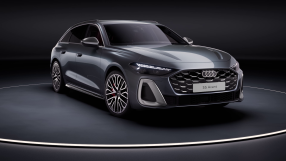
Audi S5 Avant – Exterior design Audi S5 Avant – Exterior design
Audi S5 Avant – Exterior design
Dynamic and muscular exterior design
Even at first glance, the totally redesigned A5 family has a powerful and clean design. The
modified proportions with a long wheelbase, large wheels, and flat, sporty body embody
progressive dynamism and premium standards.- Available media:
-
-
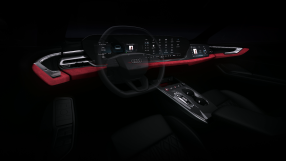
Audi S5 Avant – Interior design Audi S5 Avant – Interior design
Audi S5 Avant – Interior design
The new interior design: technology meets comfort
The design of the new Audi A5 interior is based on four characteristic features. Firstly, the
interior is designed to be human-centric, i.e., consistently geared toward the needs of its users.- Available media:
-
-
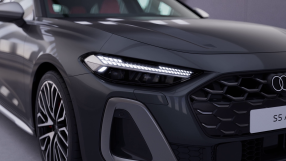
Audi S5 Avant – Matrix LED headlights with digital daytime running lights Audi S5 Avant – Matrix LED headlights with digital daytime running lights
Audi S5 Avant – Matrix LED headlights with digital daytime running lights
The technology sets new standards in terms of personalization: With a total of eight digital light
signatures included in the Matrix LED headlights combined with the digital OLED taillights,
customers can personalize the appearance of their A5/S5 Sedan or A5/S5 Avant like never
before.- Available media:
-
-
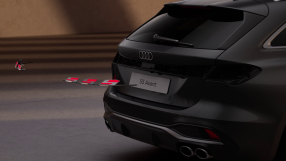
Audi S5 Avant – Second-generation digital OLED rear lights Audi S5 Avant – Second-generation digital OLED rear lights
Audi S5 Avant – Second-generation digital OLED rear lights
New standards in digital light
With the new A5, Audi is accentuating its leading role in lighting design and technology. The
headlights and rear lights have a three-dimensional design and offer optional digital light
signatures, bringing the physical and digital worlds together.- Available media:
-
-
Audi Q6 e-tron - Driver assist systems Audi Q6 e-tron - Driver assistance systems
Audi Q6 e-tron - Driver assistance systems
Driver assistance systems
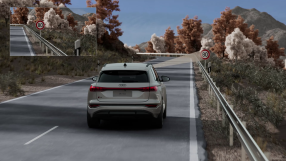
As far as the driver assistance systems of the new Audi Q6 e-tron are concerned, Audi provides a wide range of functions that significantly improve everyday driving and road safety for all road users. A first for the Audi Q6 e-tron is the adaptive driving assistant plus. This supports the driver when accelerating, braking, maintaining speed and the set distance from the vehicle in front, as well as with lane guidance. This can increase driving comfort, especially on long journeys. The system uses various sensors to permanently monitor the vehicle's surroundings. These include the radar sensor installed in the front of the vehicle, the front camera, and the ultrasonic sensors. Depending on the region, high-resolution map data and swarm data from other vehicles calculated in the cloud are also used to improve driving behavior. From a fusion of this information, the vehicle calculates the route ahead and guides the vehicle comfortably and in the center of the lane by means of supportive steering interventions. At the same time, the system reacts to vehicles joining the same lane in front and regulates the distance to them. It also anticipates and adapts the vehicle speed to speed limits and situations such as bends, junctions, traffic circles and ramps (highway entrances and exits). In stop-and-go traffic, the system slows the car to a standstill and can automatically set off again depending on how long the vehicle has been stationary. At stop signs, the speed is reduced to comfortably allow the driver to take over the situation. Thanks to the large number of parameters included, the adaptive driving assistant offers the most comfortable driving experience possible across the entire speed range and in traffic jam situations. Functional content may vary depending on country availability and vehicle configuration.
- Available media:
-
-
Audi Q5 - Package and variability Audi Q5 - Package and Variability
Audi Q5 - Package and Variability
Practical: Space concept and variability
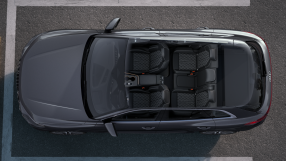
The latest generation of the new Audi Q5 has gained significantly in key product attributes – and occupants can feel this from the very first time they experience it. In combination with the new interior concept, the result is a comfortable feeling of space with ample head and legroom.
A particularly practical feature of the Audi Q5 SUV is the fully adjustable rear seat. It can be moved lengthways and tilted, thus increasing the trunk volume or comfort for rear passengers as required. At the same time, three people can be comfortably seated on the rear bench. With the rear seats folded down, the transport volume increases to up to 1,473 liters, depending on the model variant. The luggage compartment cover can be stowed in a specially designed compartment under the luggage compartment floor. This provides even more space for luggage and a secure place for the cov
- Available media:
-
-
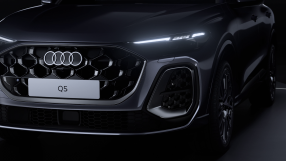
Audi Q5 - Exterior design Purism and dynamism: the exterior design
The third generation of the Q5 SUV models has become even sportier and offers perfect proportions. The taut and high shoulder line creates a powerful silhouette, connects the front and rear lights, and makes the vehicle appear longer. Above the sill, a rising line runs over the wheel arches and into the rear bumper, giving the vehicle a dynamic appearance even when stationary.
The front is self-confident, as all the defining design elements are positioned one level higher than in the predecessor model. The sporty, wide Singleframe sits high and is flanked by vertical, functional air curtains.
The strongly filed and sculpturally shaped headlights create a sharp, focused look, manifesting the agile and self-confident character of the car right from the front. A large air intake with sensors sits under the Singleframe, giving the Q5 a visually full and wide stance on the road.The exterior S line impresses with striking and sporty body components, such as the Air Curtain Tubes with matt anthracite chrome-look accents. On the S model, these elements have a matt silver chrome look.
The rear of the Q5 SUV has an extremely clear design thanks to the maximum reduction of lines. From the rear window to the lower edge of the three-dimensional shaped light strip, there is a smooth surface, defined by the light strip with a sharp cut across the entire width of the vehicle. The area between the light strip and bumper is kept sleek and gives the SUV a sporty elegance. The diffuser is integrated into the raised bumpers as an island. The positioning and shape of the functional tailpipes depends on the engine: a double square tailpipe under the diffuser on the left-hand side (for all diesel engines), or rectangular tailpipes on the right and left (for all petrol engines). The S model features the four iconic twin round tailpipes in a new, sharpened design.
- Available media:
-
-
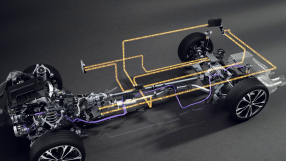
Audi Q6 e-tron - Chassis technology
Audi Q6 e-tron - Chassis technology
Optimised suspension
Most of the systems and components belonging to the chassis of the Q6 e-tron model series are new developments. Experts tune them in line with the familiar Audi DNA in order to create a high level of emotionality and the premium experience typical of Audi.
The newly designed front axle has a significant influence on the driving dynamics of the Audi Q6 e-tron. For the first time in an Audi model, the control arms are arranged in front of the suspension arms in the direction of travel. In addition to the advantages in terms of driving dynamics via the axle kinematics, this results in an improved package benefiting the position of the high-voltage battery. The refined axle kinematics provide noticeably more driving dynamics and also improve the steering behavior. The steering rack is now firmly bolted to the subframe. This makes the vehicle significantly more agile. The design of the steering and its control by means of new software modules in conjunction with the new front axle enable agile handling and provide the driver with significantly improved feedback on the current driving and road conditions at all times via the steering wheel.
- Available media:
-
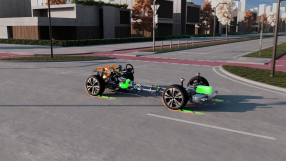
Audi AS Avant – E3 1.2 electronic architecture Audi A5 Avant – E3 1.2 electronic architecture
Audi A5 Avant – E3 1.2 electronic architecture
Platform with efficient combustion engines and
hybridization
The new A5 series is based on the Premium Platform Combustion (PPC), a platform for
conventionally powered vehicles with longitudinally mounted engines. This platform works with
the E³ architecture.- Available media:
-
-
Audi A5 Avant – 2.0 TDI with MHEV plus technology Audi A5 Avant – 2.0 TDI with MHEV plus technology
Audi A5 Avant – 2.0 TDI with MHEV plus technology
The efficient engines in the Audi A5 family cover a wide range, from the conventional entry-level
model to the comfortable long-distance runner and the dynamic sports car. The engine,
transmission, degree of electrification, and drive type packages are geared towards our
customers' expectations.- Available media:
-
-
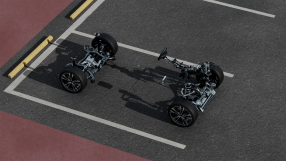
Audi A5 Avant – Drivetrain technology Audi A5 Avant – Drivetrain technology
Audi A5 Avant – Drivetrain technology
More dynamic chassis and steering design
The handling characteristics typical of the Audi brand have also been further developed in the
new A5. As a result of extensive detail work on the suspension and steering, the Audi A5* offers
precise, effortless, and largely neutral handling, which can be differentiated significantly more
between comfort and sportiness if the optional suspension with adaptive dampers is selected.- Available media:
-
-
Audi A6 e-tron – Design and Lighting technology Audi A6 e-tron – Design and Lighting technology
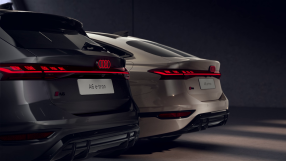
Audi A6 e-tron – Design and Lighting technology
The exterior: elegant and progressive
The body's clean design focuses on dynamism, progressiveness, and elegance. The front is simultaneously harmonious and expressive. The slim design of the daytime running lights and the wide grille make the A6 e-tron* appear flat and wide on the road.- Available media:
-
-
Audi A6 Sportback e-tron – Efficiency technologies and Aerodynamics Audi A6 Sportback e-tron – Efficiency technologies and Aerodynamics
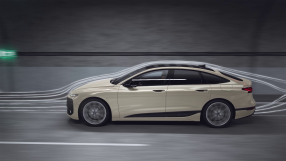
Audi A6 Sportback e-tron – Efficiency technologies and Aerodynamics
Best in class: outstanding aerodynamics
Superior aerodynamics is a core component of the long history of successes for Audi. The aerodynamic heroes of the past, such as the Audi 100 (C3) and the Audi 80 (B3), also belong to the mid-size segment.- Available media:
-
-
Audi A6 Avant e-tron – Interior and package Audi A6 Avant e-tron – Interior and package
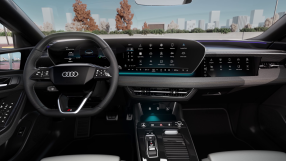
Audi A6 Avant e-tron – Interior and package
Interior and MMI panoramic display
The interior of the Audi A6 e-tron* is consistently geared towards the users' needs. The three-dimensional and high contrast design deliberately places elements in the foreground or background, creating a spatial architecture tailored to the occupants in terms of design and ergonomics.- Available media:
-
-
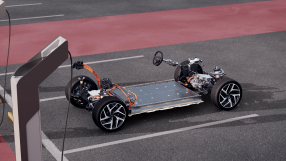
Audi Q6 e-tron – Battery and charging technology Audi Q6 e-tron – Battery and charging technology
Audi Q6 e-tron – Battery and charging technology
This technical animation shows the new battery and charging technology of the Audi Q6 e-tron. Powerful, compact, and scalable electric motors, as well as a newly developed lithium-ion battery consisting of twelve modules with a total gross capacity of 100 kWh (94.9 net) ensure a range of up to 625 km (388 mi).
- Available media:
-
-
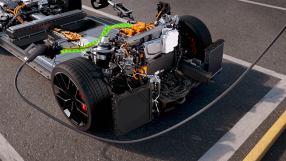
Audi RS e-tron GT performance – Battery and charging technology Audi RS e-tron GT performance – Battery and charging technology
Audi RS e-tron GT performance – Battery and charging technology
Audi has lowered the weight of the high-voltage (HV) battery while simultaneously increasing its energy density. Despite the higher energy content, the weight of the HV battery has been reduced by nine kilograms to a total of 625 kilograms. The HV battery boasts a gross storage capacity of 105 kWh (net: 97 kWh). Among other measures, optimizing the two-layer cooling plate results in a twelve percent increase in capacity for the 33 cell modules, each holding twelve pouch cells with a flexible outer skin. Audi has also modified the cooling system of the cells themselves.
- Available media:
-